The Wonder of Religious Vocation
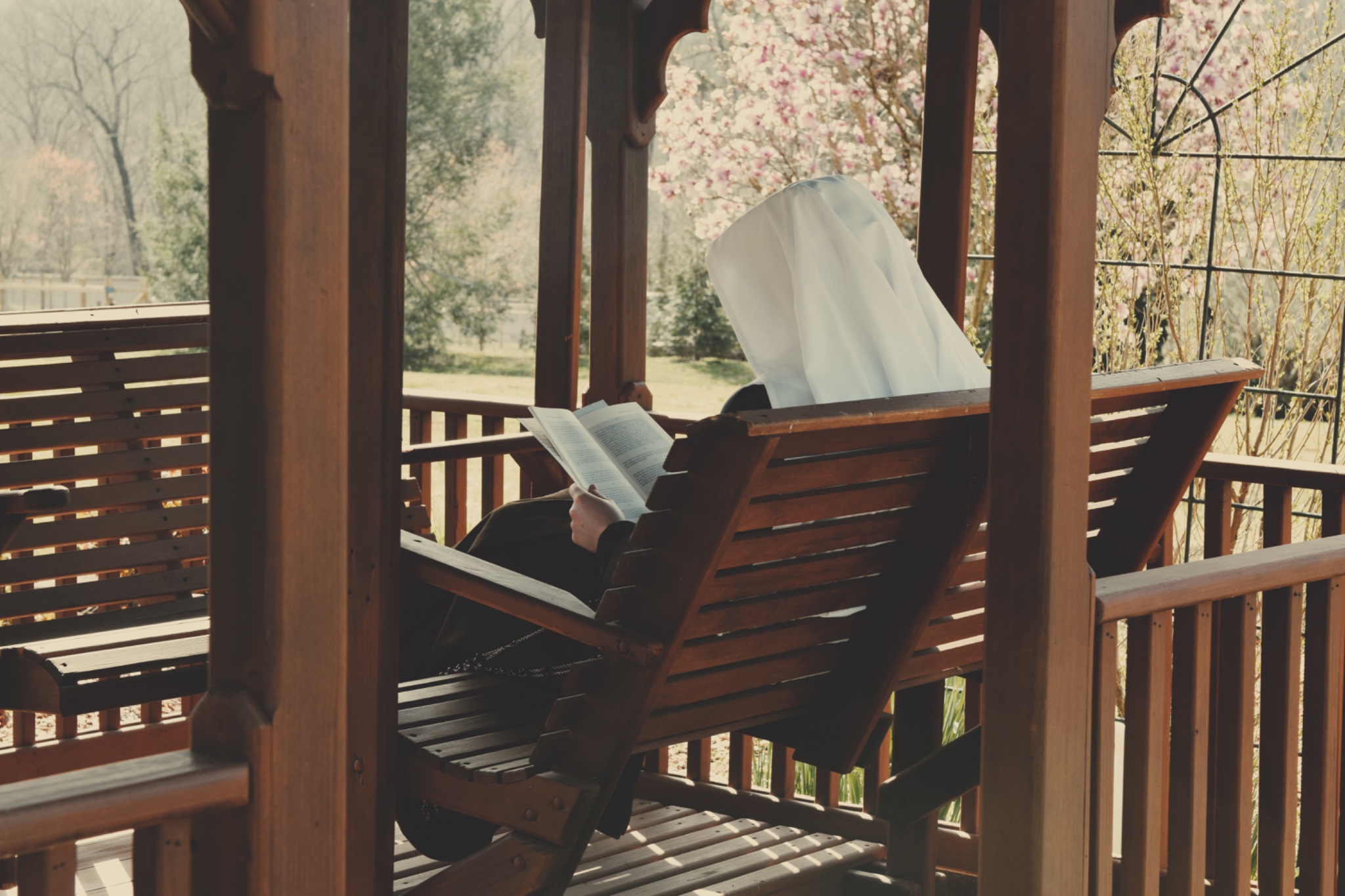
When it comes to the gift of a religious vocation, there is plenty of room for wonder. Outsiders may wonder what religious life is for, especially when appraising the contemplative religious life. But religious life is not so much an avenue for doing as a space to be. Contemplative religious life, properly approached is a space for much “sacramental occupation,” to borrow a phrase from Hilaire Belloc.
Belloc uses the phrase to describe the attitude of quiet leisure and the wonder that follows as one makes connections between the little details of life and their Creator. This leisure and wonder begin with delight in God’s creation, become a communion with the whole world, and by extension, even communion with God Himself. For instance, I could begin by gazing on sunshine filtering through the stained-glass windows, delighting in the way the colors somberly dance across the floor and walls of the chapel, and end by pondering Christ, the Light of the world.
The same approach must be taken to viewing the gift of my own religious vocation. For some reason, God decided He wanted me to be with Him as a contemplative nun, and there was absolutely nothing I did to get His attention, no debt that He owed me, no special undertaken, or spiritual athletics performed that made me look “good enough” for the cloister. Instead, as Felix Duffey, CSC writes in his book, Manual for Novices, the selection is totally God’s initiative:
“God makes a free and deliberate choice of those whom He wishes to be His instruments in accomplishing His designs,” and “the central fact should never be forgotten that His calling of a picked group to be His companions is a special mark of His free choice” (17, 18).
That in itself is a perennial cause for wonder and awe. I can first look with wonder at God’s fingerprints in His creation, and then I can look down at my religious habit with awe and say, ” To keep religious life fresh, it is important to maintain the wide-eyed wonder of a child and calm, sacramental leisure in order to be able to learn not just what to do but who to be.
Giving Yourself Completely to God
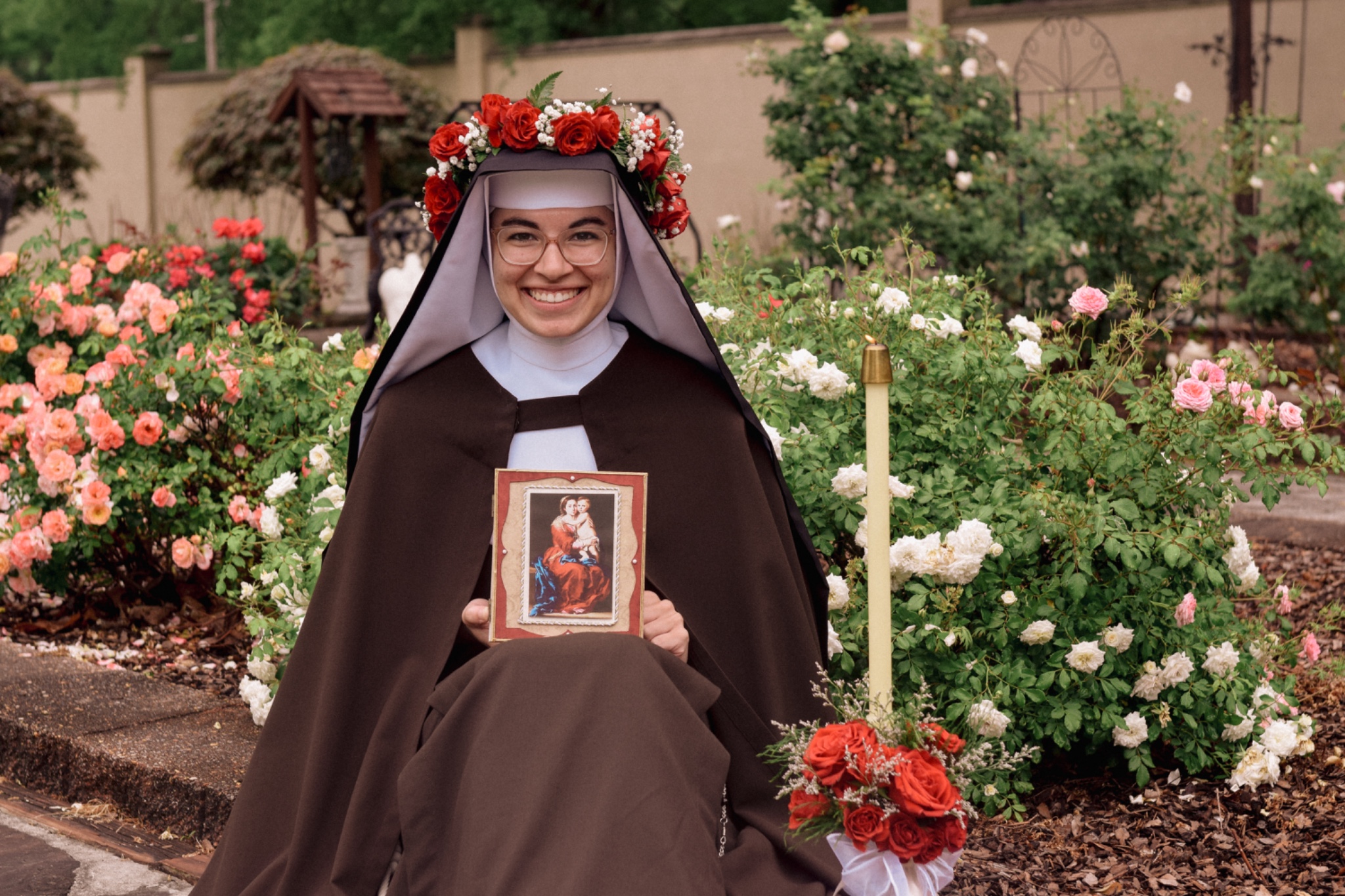
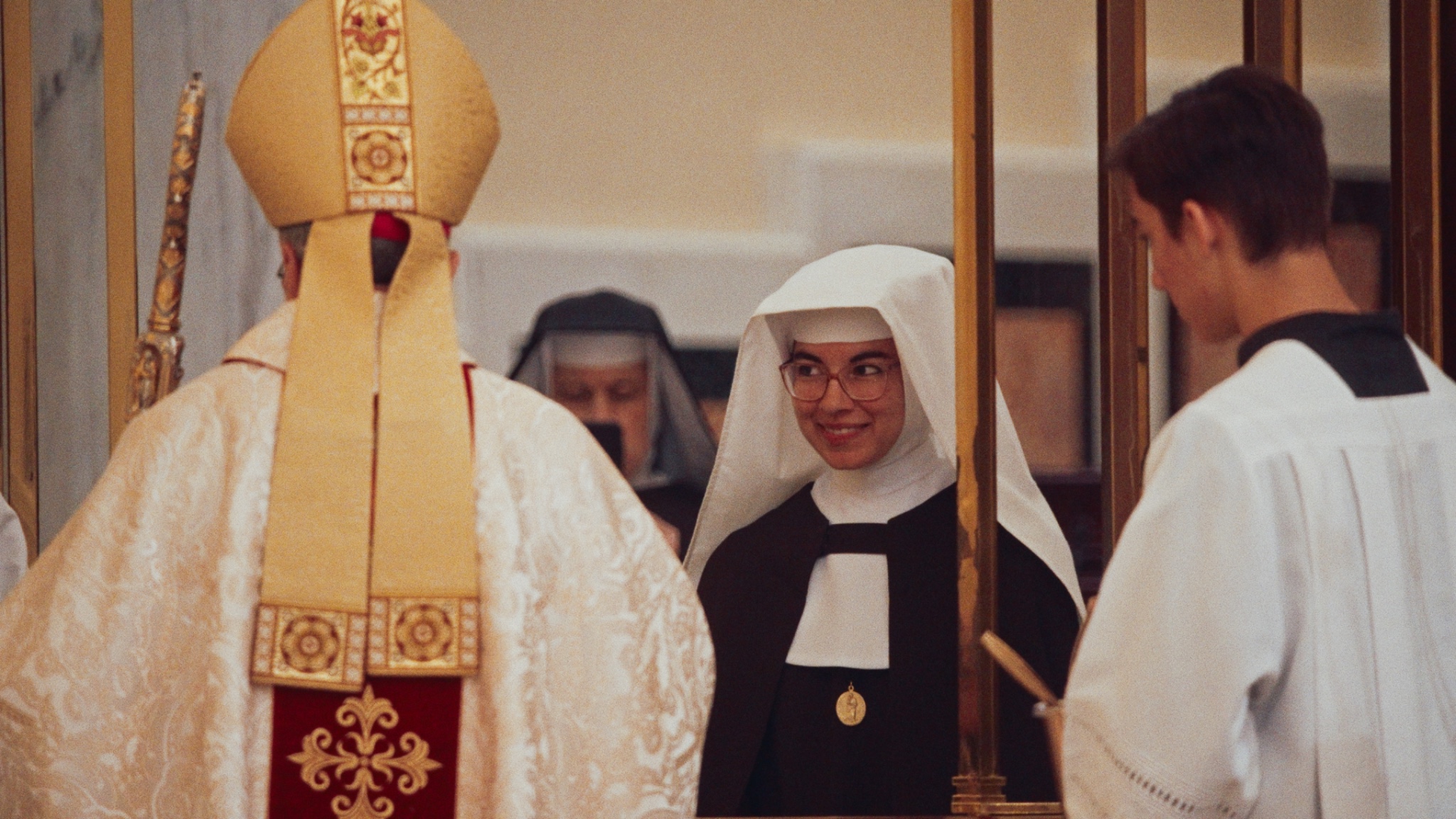
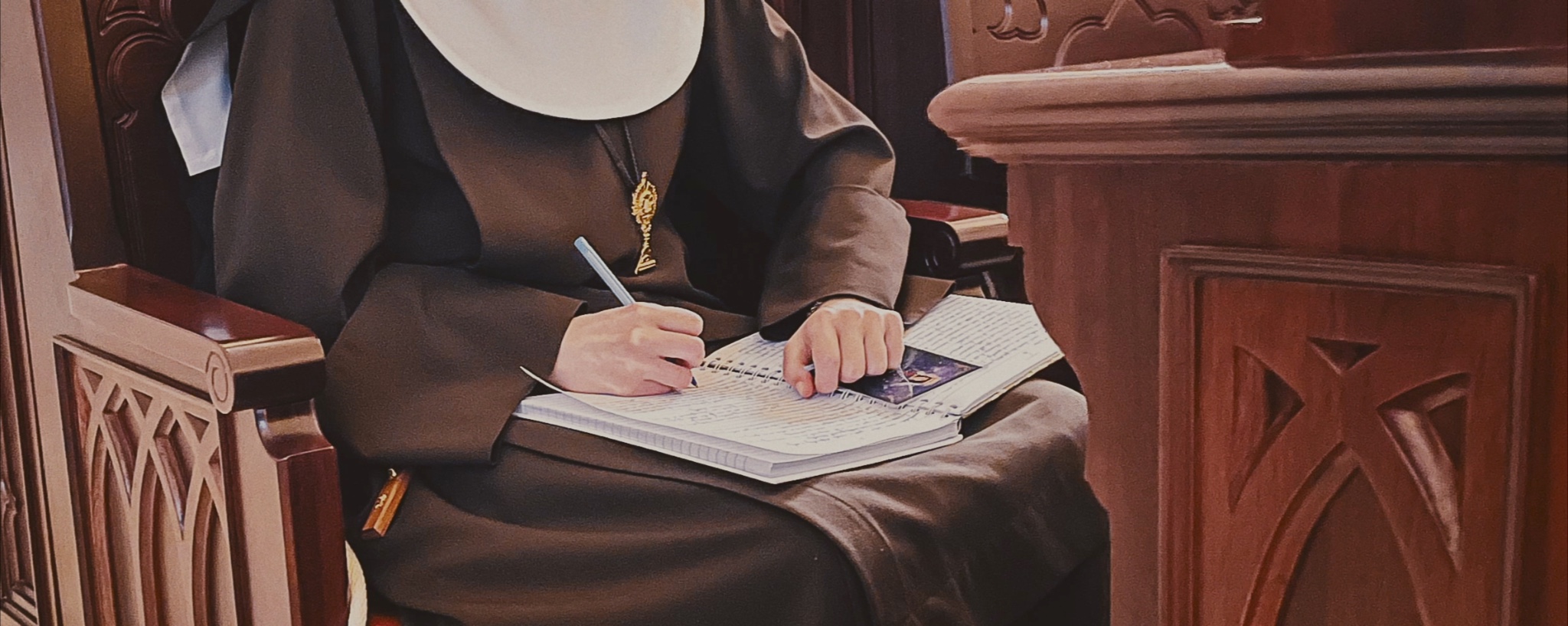
 In preparation for our vow ceremony, the to-be-professed gets to craft a “vow card”, a sort of beautifully decorated frame which hold a personally chosen image of Our Lord, Our Lady, and the panel where she handwrites her vows. This is what she reads from for the actual ceremony.
I wanted to mention this project because of the significance of one the details on my vow card has—far from being merely an aesthetic touch, this image has special significance, for the implications are rather… eternal.
On the top of the place where my vows are written, I have placed a small image of the Rublev Trinity, a famous icon depicting the Three Persons that refers back to the strange guests of Abraham in Genesis 18:1-8. This image, then, is an entry point into the eternal outpouring of God’s love. The Trinity gazes down, it seems, on my vows. The gaze of chosen love they pour down on my small offering is like a waterfall, surrounding me in God’s very Life.

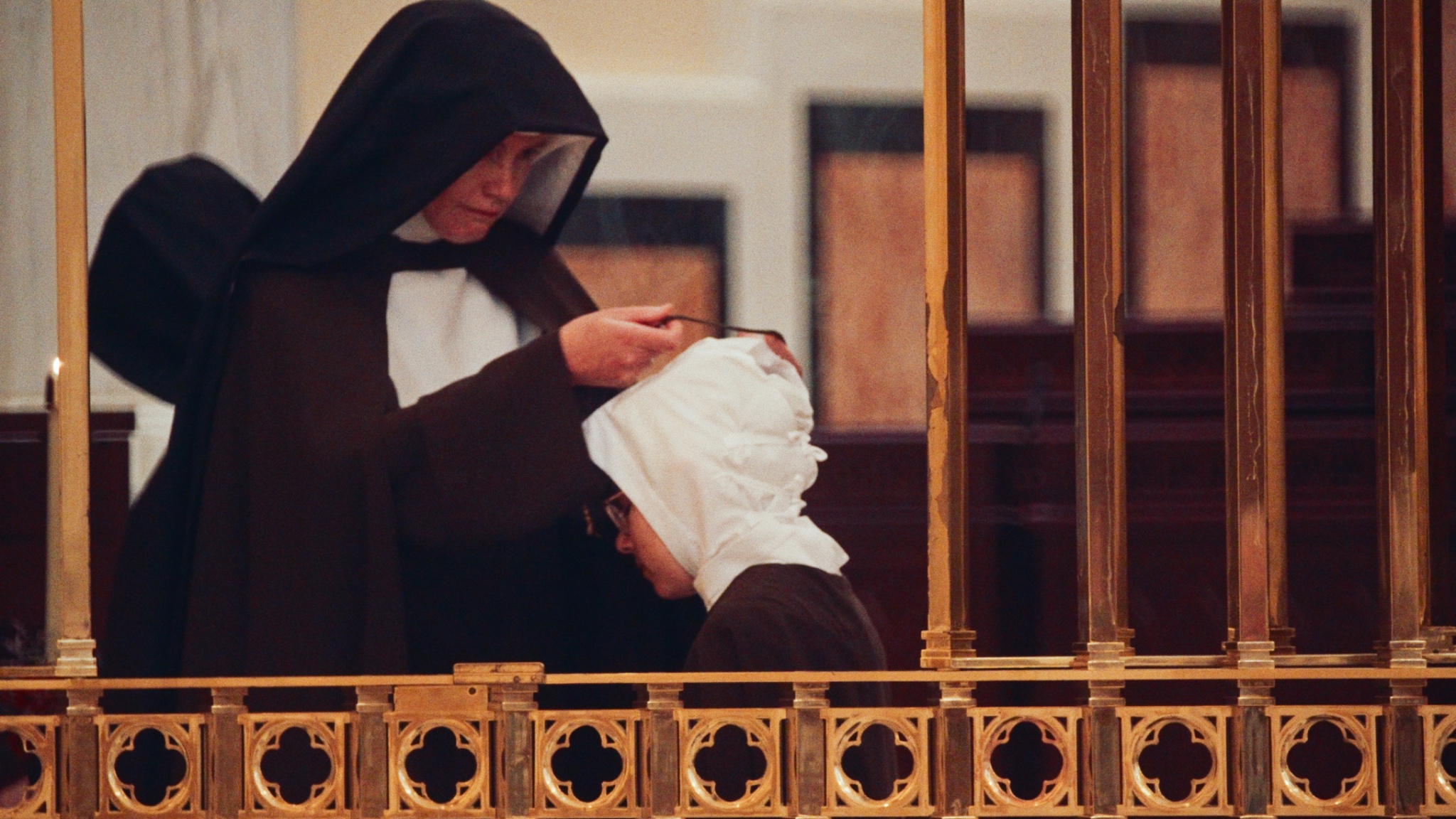
The vows themselves reflect the Trinitarian Mystery; as in the vows of poverty, chastity, and obedience, none of the Three Persons possesses anything, loves anyone, or wills that anything be done without the concordant possessing, willing, and loving of the others. Our vows and community life seek to manifest this mystery of unity; this communion of persons is the End towards which we all strain.
I am so filled with gratitude for the gift of my profession. I get to belong to God in a unique and total way. The sense of belonging to both Him and to the community in a more fixed and stable way has been a truly grace-filled experience. And while, yes, it’s a significant commitment on my part, and while each moment of the ceremony itself was brimming with meaning, I realize that, fundamentally, it’s not so much about my choice to make give myself. It is, rather, His choice for me. There would no me to give if God had not first given me to me!
And His choice is for each of us. At every moment, the Triune God is gazing down on your life too. And He prays for us, that we may, “all be One.”

Drawn Into One in Him
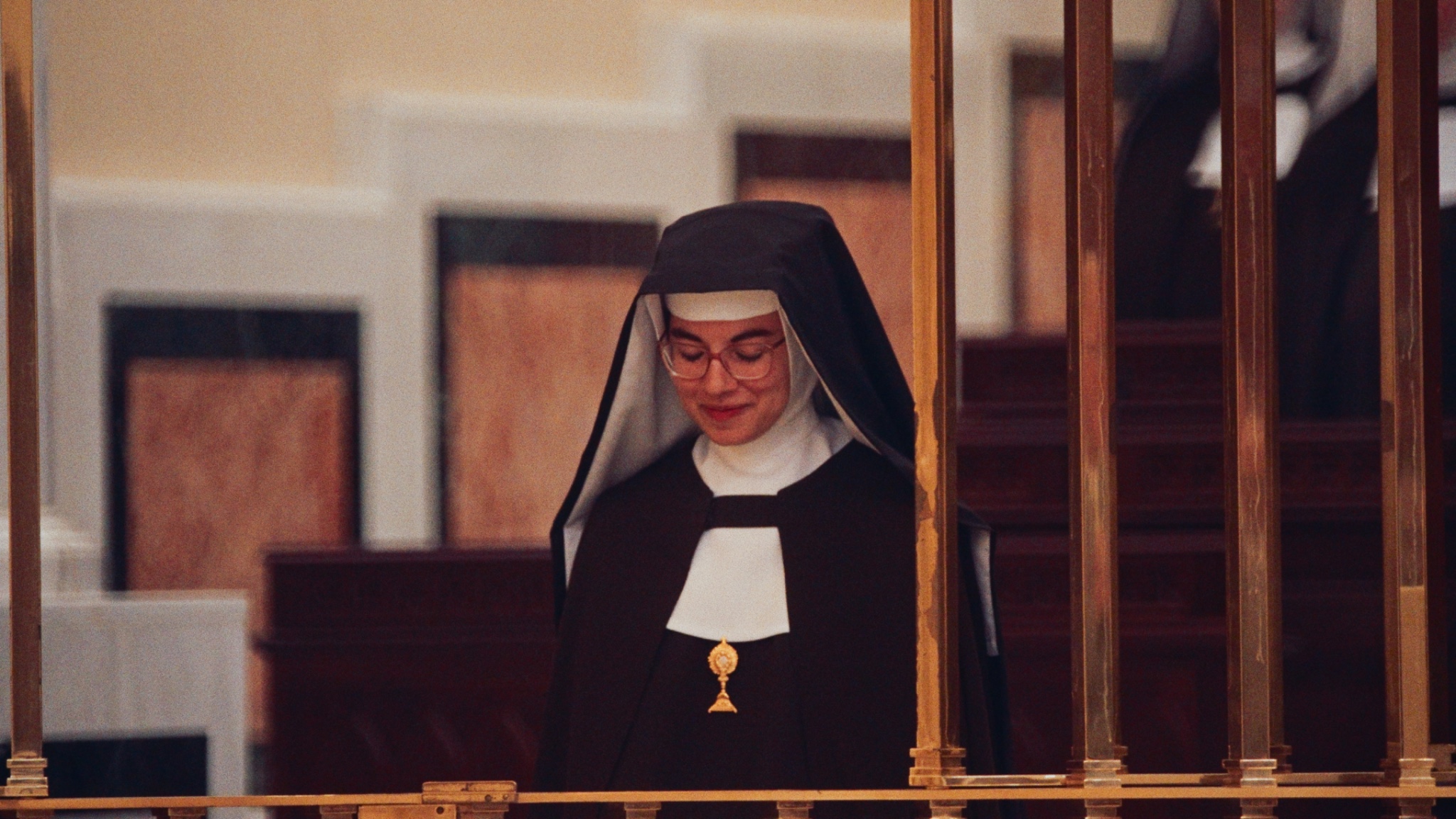
One of the biggest highlights of my First Profession was the realization of an important prayer, “draw all things into one in You, Lord.” To me, this prayer is like a snapshot of the ultimate journey of our lives, with all its sorrows and all its joys. The journey of every part of us being transformed into Him and so becoming on in Him, to the glory of God the Father.
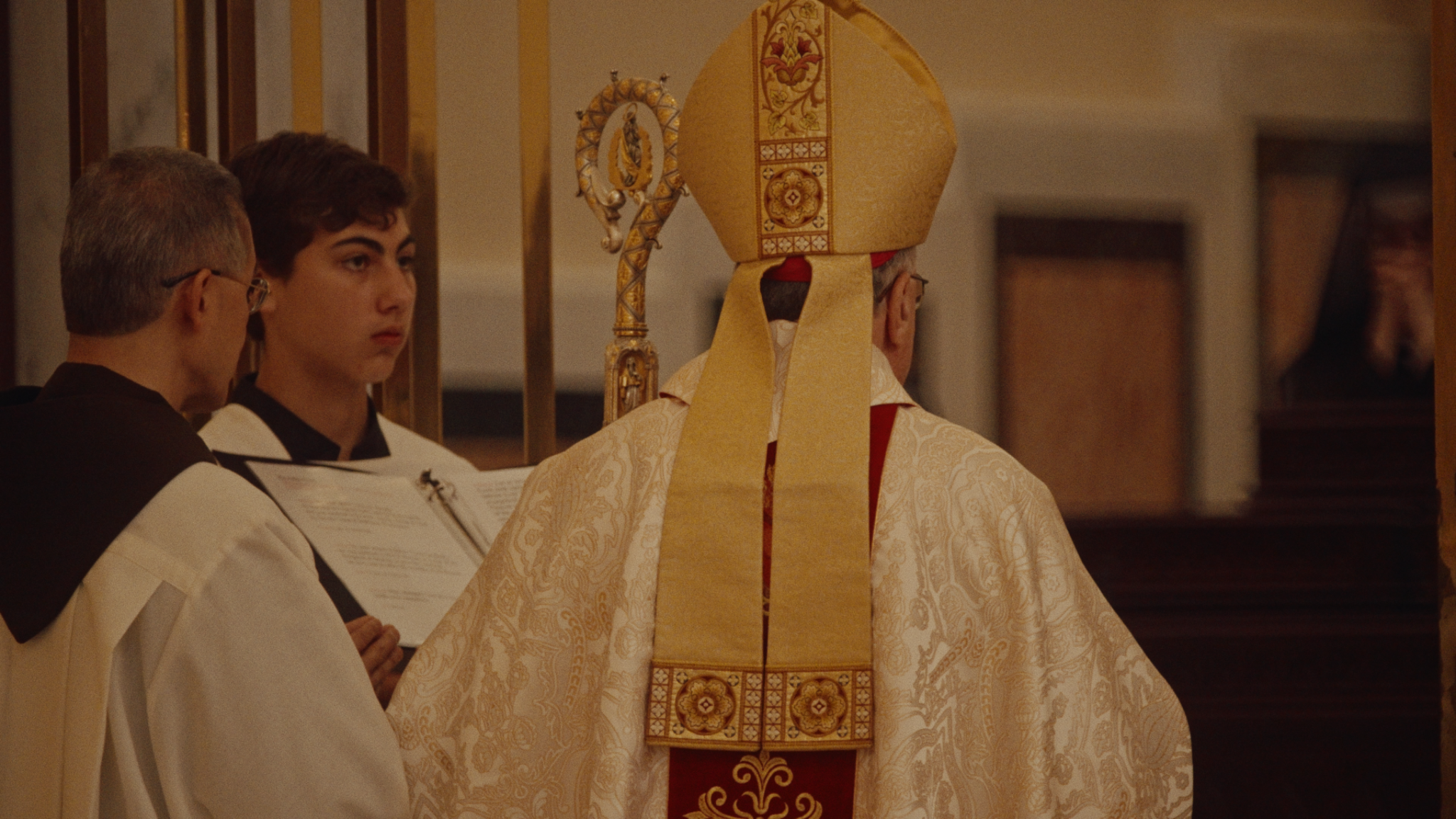
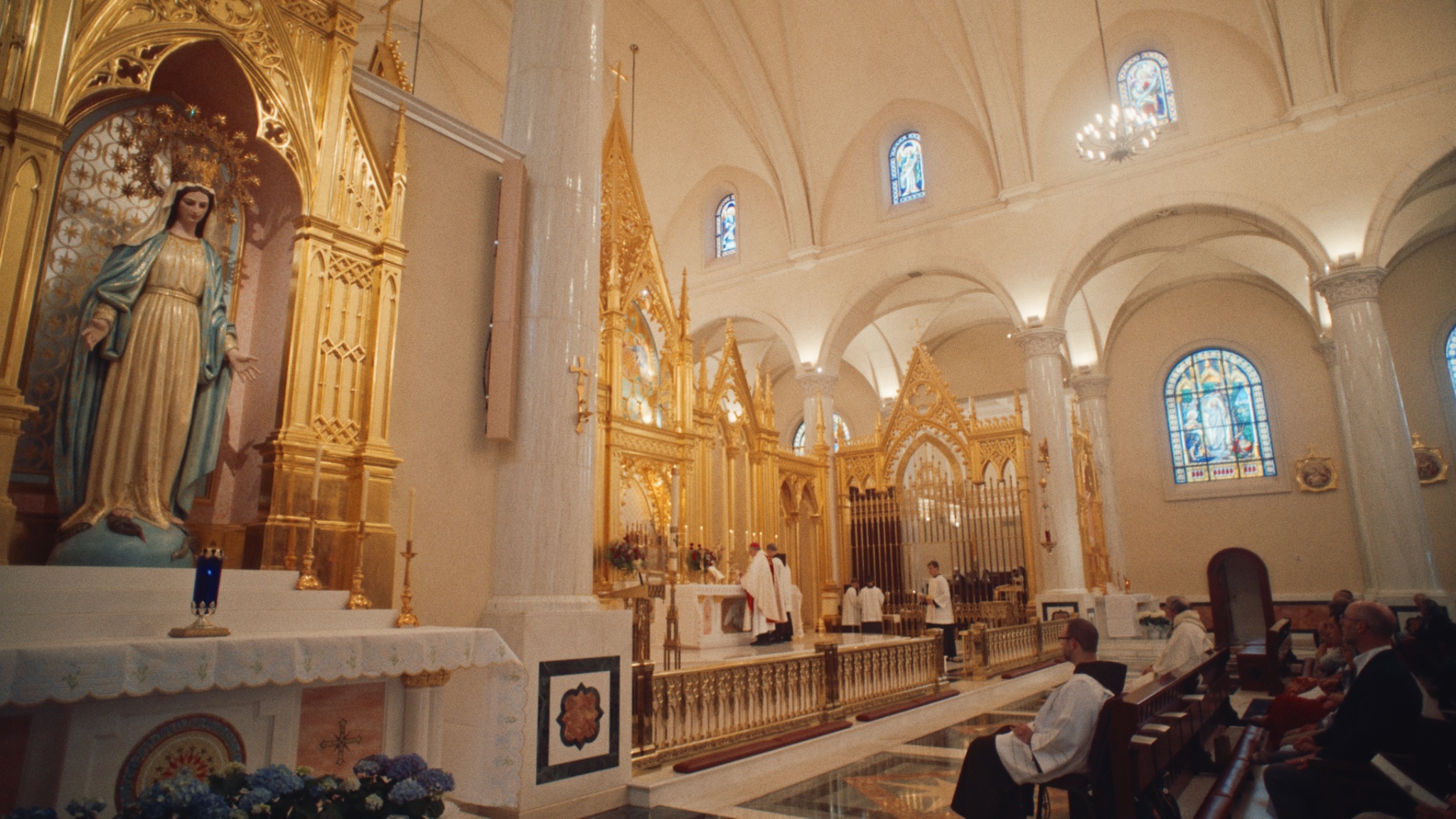
As I watched Bishop Baker process down the isle led by the Cross bearer, and saw my parents and siblings, relatives and close friends sitting in the front pews, and knowing all of my sisters were right behind me, I got to watch Him draw us all into one in Him. Everyone I loved, who have helped form me to be the person I am, was there to celebrate with me as I became more totally His. Throughout the whole liturgy, this was on the forefront of my mind, filling me with gratitude and awe at His Goodness.
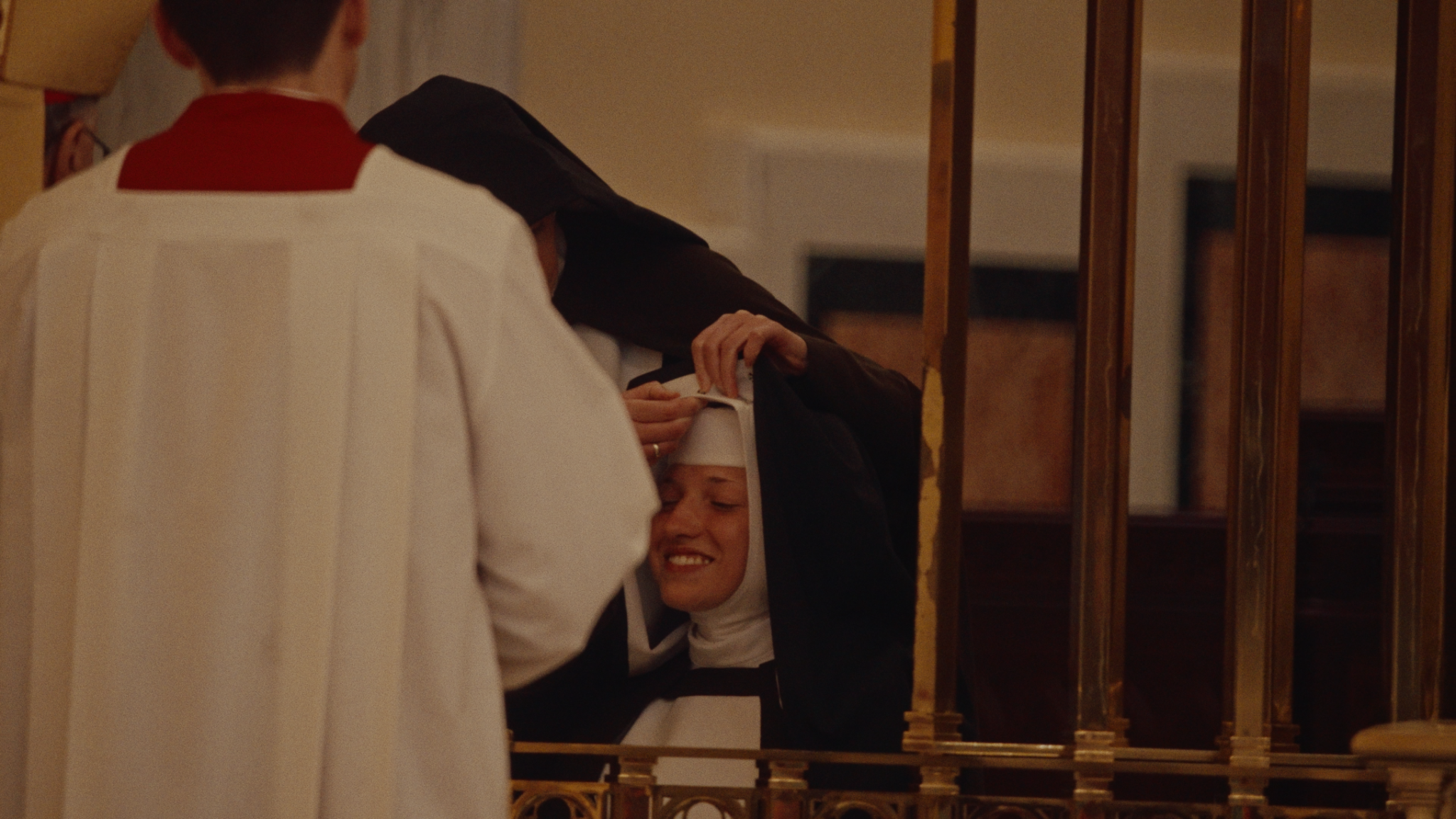
Directly across from me sat a wonderful priest and father figure – this man knew my vocation before I did. In the homily, he said something that expanded this prayer, “draw all things into one in You, Lord.” He said, “sister’s sacrifice is also our sacrifice. As she gives herself to her Eucharistic Lord, we are giving her to Him as well.” He noted that for everyone I love, this offering, my vocation, it costs. That as I am given to Him, each person is giving a part of themselves as members of the Body of Christ. Everyone that I love, my sisters, parents, family, and friends were participating in a particular way, processing up Calvary. And in the Liturgy of the Eucharist, as the Eucharistic Son of Man was lifted up on the altar, so was our sacrifice, and we were all drawn into one in Him. And our sacrifice became the wedding feast of the Lamb, already but not yet.
Praying Always
I was recently asked, “How are we supposed to pray always, when we have so much to do?”
Here’s my long answer.
Once while in college, I was invited to help out with a big college-wide retreat by being part of the Adoration team—interceding before Our Eucharistic Lord for the holiness and conversion of all the students involved. I readily agreed, and the organizer asked me to take the first evening hour, as well as a couple hours in the middle of the night when all the participants would be busy with other activities. I enthusiastically agreed. Since the camp site was a little far from my house, I planned to pray rosaries on the drive there and back.
When I arrived at the camp location, I pulled up to a small, single-room, unmarked building, and went inside. I was a few minutes early so I went in to wait for Our Lord to come. Inside was a white, plastic, all-purpose folding event table standing in readiness, and several neat rows of folding chairs arranged as if there were two sets of pews with a middle aisle. I took my place at the front of one of these rows and waited. I noticed the floor was a bit dusty and dirty, but there was a broom on one side of the room and a pile of debris begun, as if someone had at least attempted to sweep.
Right then, the extraordinary Eucharistic minister arrived (another college student) and hastily set up the monstrance with Our Lord inside on the event table, genuflected, and left.
I was stunned. There was definitely no altar cloth, and I cannot remember now whether there were candles. It was just Jesus and me, both of us together in a very dirty all-purpose event building. I sang Him my best O Salutaris, and gave Him all the love of my heart. I tried to concentrate on intercessory prayer, but my eyes kept straying to the broom. After about twenty minutes, I finally said aloud, “Lord, is it OK if I just clean up a bit for You?”
He didn’t say “no,” so I made a deep genuflection, and still wearing my chapel veil, started gently sweeping around the ‘altar’ table and most of the front row so that at least it was clean where He was. I swept up the piles and dumped them in a trash can in a corner. The whole time, I was intensely aware of His Presence and I never really stopped praying—really attending to Him—even as I swept.
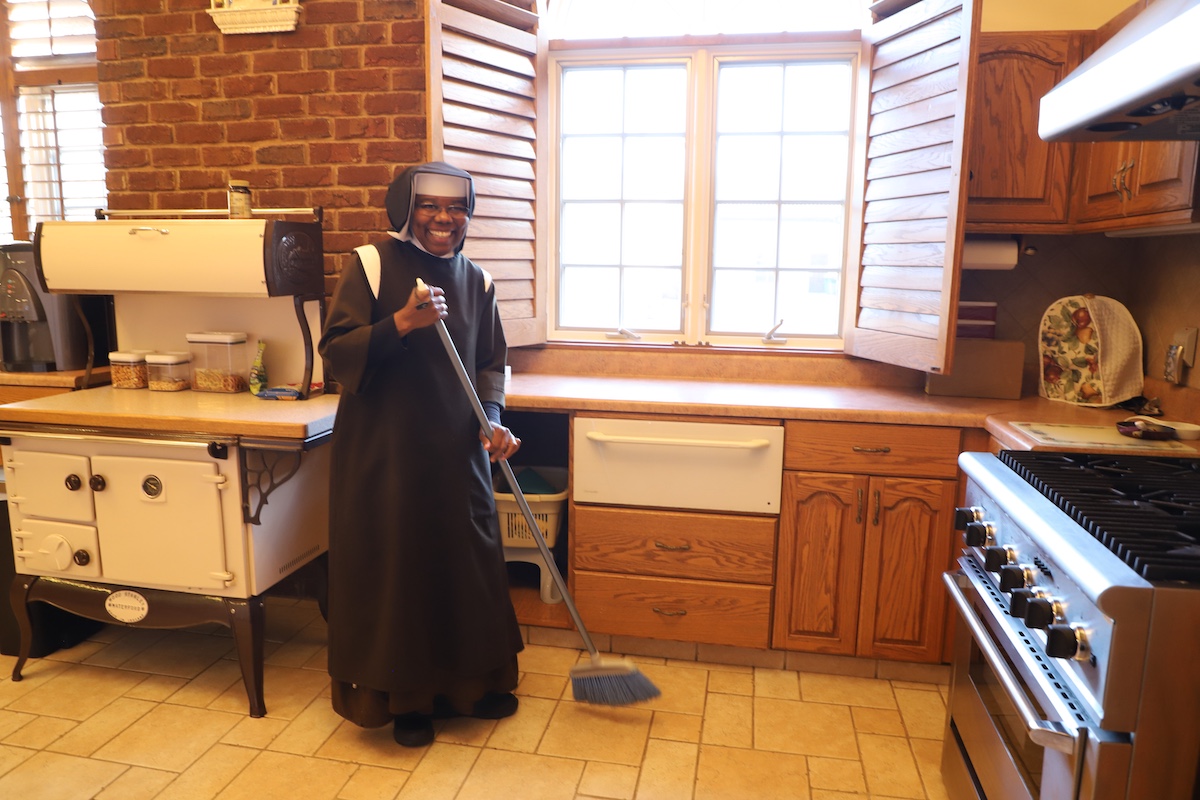
Now that I’m in the cloister, my understanding of “praying without ceasing” is a bit like that. (I don’t think I’ve ever swept that prayerfully since, but you get the idea.) Since I live in Jesus’ house, I know I never quite leave His Presence; He is always there, watching me, smiling at me, loving me; so I should be attentive to Him and work in the spirit of prayer.
Oh…and in case you were wondering: I handed off the next adoration hour to a friend’s mom who was a woman of action. She was incensed at the lack of preparation, and declared she would do something about it. When I returned for the 2am adoration hour, the makeshift chapel was transformed. To her credit, my friend’s mom supplied the table-altar with multiple altar cloths, candles, and bouquets of flowers flanked the foot of the altar. Besides that, the room was FULL of college students deep in thought and prayer, many of them journaling, some of them crying, and most of them gazing at Our Lord in His Eucharistic beauty.
Having already prayed my third rosary on the drive up, I was content to just gaze at Our Lord and rest in His Presence. This was prayer enough: He is God, and He is good.
St. Anthony of Padua
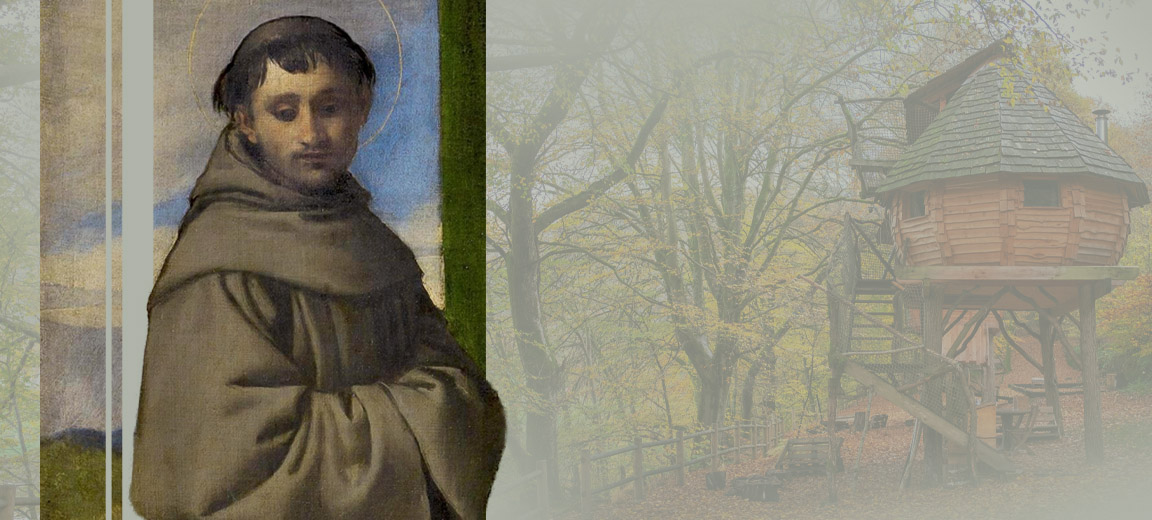
The saint for this month is St. Anthony of Padua, renowned preacher and doctor of the Church. Born in Portugal, St. Anthony started his life with the name of Ferdinand. Pious from youth, he entered an Augustinian monastery and began to study the Scriptures. However, his life was soon to take a radical turn when he had an encounter with the Franciscan protomartyrs’ relics, which were returning from Morocco. Moved by their zeal for the Gospel, he left the Augustinians to join the ragtag band of newly minted Franciscans. He wished to be a humble and unknown brother, but when a disorganized ordination ceremony of both Franciscans and Dominicans was taking place, and between the Order of Preachers and the Friars Minor not a homilist could be found, it was the obedient and humble Anthony who was commanded to preach. His preaching turned out to surpass the wildest expectations of his superiors, and he spent a significant amount of time from that point on preaching and teaching far and wide—and performing many miracles to boot. Two of his more notable miracles include preaching the Gospel to the fishes when he came upon some less than reluctant folks to evangelize, and also a Eucharistic miracle involving a genuflecting donkey.
One thing that I particularly love about St. Anthony of Padua is his humble silence. While he was known as an incredible preacher in his day, the thing he is most known for is nothing remotely scholarly, but as a hero in an area that is one of the most humble and basic in this fallen world: he operates as a finder of lost objects. Chances are, if you know nothing else about St. Anthony, you do know that. His skill is shockingly reliable, and oftentimes I have found that if you don’t find it right away, it’s because he’s working with God’s timing—which sometimes is not ours. Other things that St. Anthony teaches me: patience, yes, and also that even saints have their fun quirks. He had a deep thing for treehouses. Towards the end of his life, he actually lived in one.
St. Anthony also carries the notable honor of being the Franciscan who allowed study to enter the order. St. Francis specifically told him not to let it extinguish the spirit of prayer, but allowed that novelty for the sake of the Gospel and this humble preacher of the Good News. I am so grateful for St. Anthony’s loving witness to the Church, and to the Franciscan Order, especially at a time when the Friars Minor were far more than disorganized. He maintained sanctity and his spirit of prayer, and continues to be a presence in our own day. Especially when something is lost.
Just Love
Hundreds of souls brightly clad, mantilla-ed, done up well
for the televised Holy Hour:
Do they know? Do I?
That Divine Mercy pierces the heart
as Divine Justice rends the soul;
That Mercy cannot be separated from Justice
in God
Blind beggars, blind guides, heroes, saints
Before His Majesty each one is the same:
A sinner
A less-than-nothing
Unworthy of Your Love
Yet strangely, painfully,—mercifully, justly? or is it an injustice?
—no, because God is not unjust—
Loved by You.
Do they know? Do I?
This Mercy breaks and splits in two
This double-edged sword piercing marrow, bone, soul, spirit
Discerning reflections and thoughts of the heart—the heart cries
Mercy
But Mercy cannot descend
without Justice—
A severe Mercy; a just love—
Or is it
Just Love
And because it is just Love
I do not understand every aspect but
Blindly trust Your Goodness
You
You Who suffered and died
Whose Heart was pierced and broken
with Just Love for me
How can I not trust You?
How can I not love You?
Do they know Your Love?
Do I?
No, not totally
For—to know You totally is only for You
So with holy Job I bow
Before the Majesty of Your Mystery
You
Your Mercy
Just Love
Gratuitous Grace
For Lent one year in my parish Church, my pastor decided to instill in us a spirit of togetherness in our Lenten strivings.
At the end of his homily, slips of paper were passed down the pews.
These papers were similar to those that appear for diocesan fundraising campaign: how much money can you commit to this fundraiser? Except, these Lenten slips of paper had just three words on them: Prayer, Fasting, Almsgiving, along with plenty of space for writing commitments.
We had several minutes of silence as everyone quietly filled out their Lenten commitments.
They were gathered up again by the ushers and ceremonially placed in a black box which sat under the altar for the entirety of Lent.
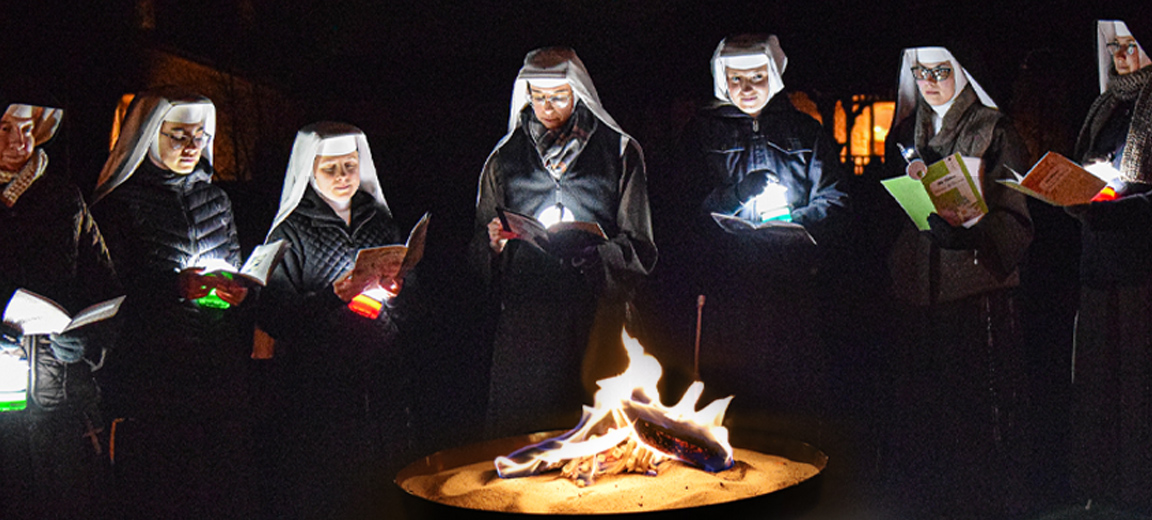
Father promised no one would read them, and that they would be burned in the Easter fire at the end of Lent.
That Lent was special.
There was a visible reminder to everyone in the parish not only of a personal commitment but also a parochial commitment to Lenten strivings.
As we crept closer to Holy Week, however, I had a shocking realization as Our Lord was lifted high during the consecration.
The juxtaposition of the box containing all of our promises, commitments, strivings, & mortifications with Jesus-Host: the box was almost nothing compared to the gratuitous grace purchased by Our Lord in His Passion.
I felt almost as if I were trying to buy something worth more than millions with only a few coins.
And yet, the Lord wants us to strive.
He needs our cooperation with His grace—His gratuitous gift of grace—in order for us to be transformed.
As important as our own baby steps are, however, ultimately it is God Who lifts us up out of ourselves and transforms us.
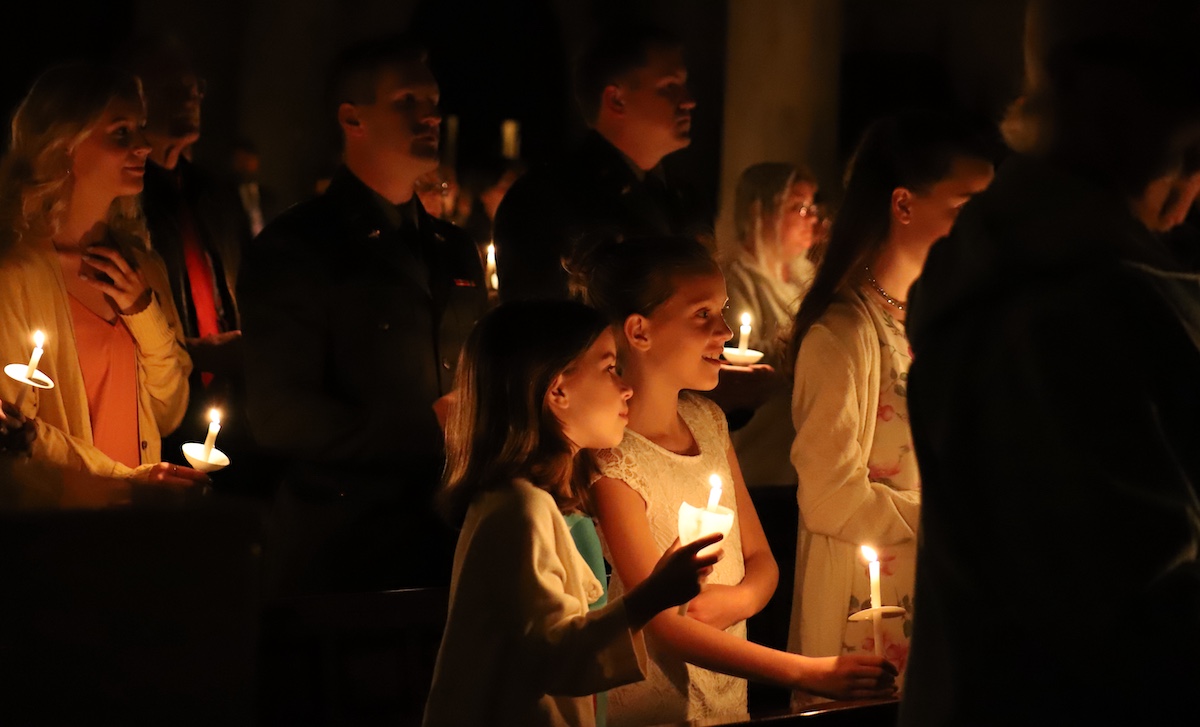
Watching all of our slips of paper burn in the new Easter fire was extremely satisfying.
Watching all of our slips of paper burn in the new Easter fire was extremely satisfying.
Was there a bit of pride, a bit of basking in accomplishment in the glow of the Easter fire?
Maybe, maybe not.
I know I was hit with the soul-deep realization:
He came while we were still sinners.
He comes every day while we are still sinners.
He wants to redeem us—He would redeem us—again and again if He had to.
“For why did Christ, when as yet we were weak, according to the time, die for the ungodly?” (Rom. 5:6)
I will be His who first chose me for Himself
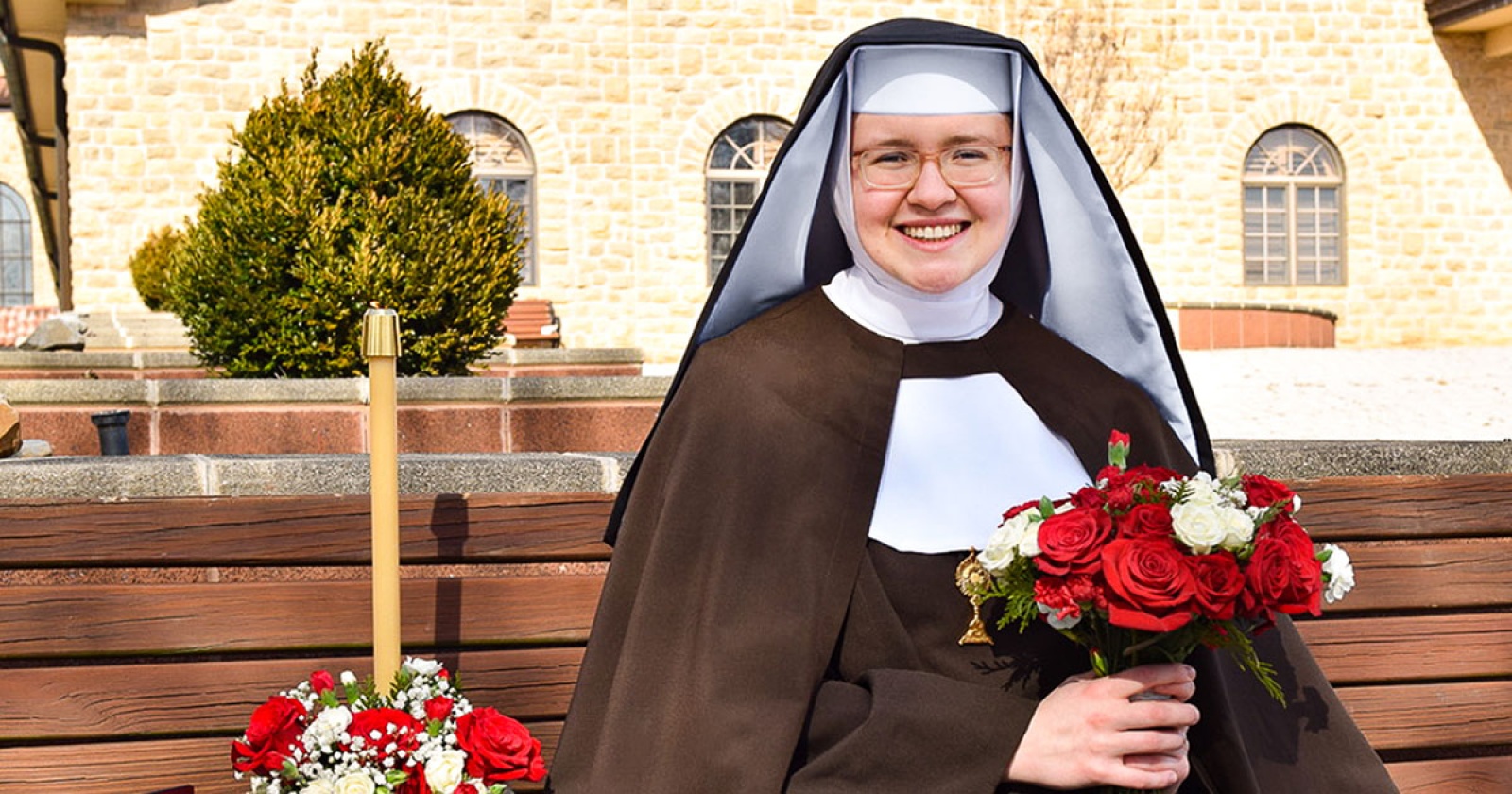
This year, the feast of St. Agnes of Rome was very special as I made my first profession of vows as a PCPA.
There was so much grace (probably greatly increased by the prayers of my sisters) that brought me to that special moment and which continues to sustain me.
I think one line from the Office of St. Agnes opens up a special aspect of my consecration: “I will be His who first chose me for Himself.”
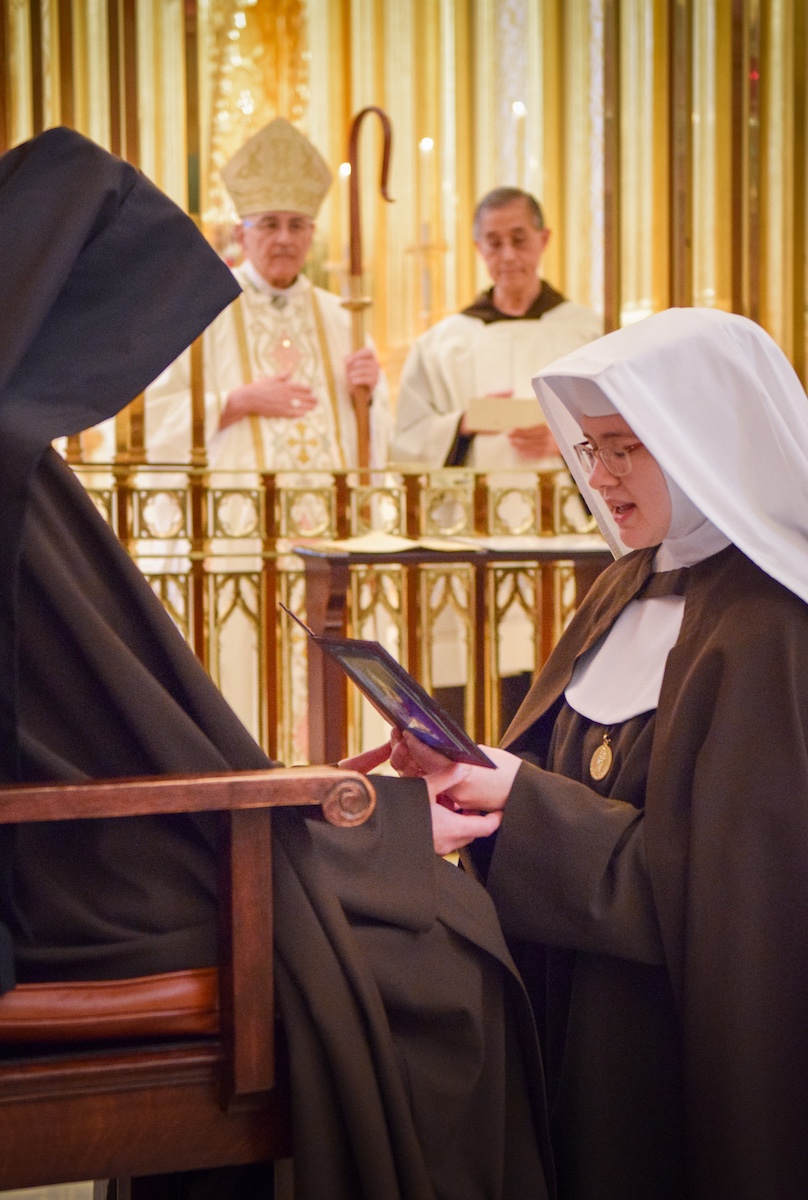
God the Father created me out of sheer love.
And from all eternity, He knew that He would give me as a gift to His Son, a gift to belong to Him, to imitate Him in His own poverty, chastity, and obedience for the sake of greater love.
He created me to be a particular vessel through which Christ’s love for the Father and for men can be made manifest here and now.
In being consecrated to God, I am, in a hidden way, open to bringing His love to those who desperately long to know that they are loved.
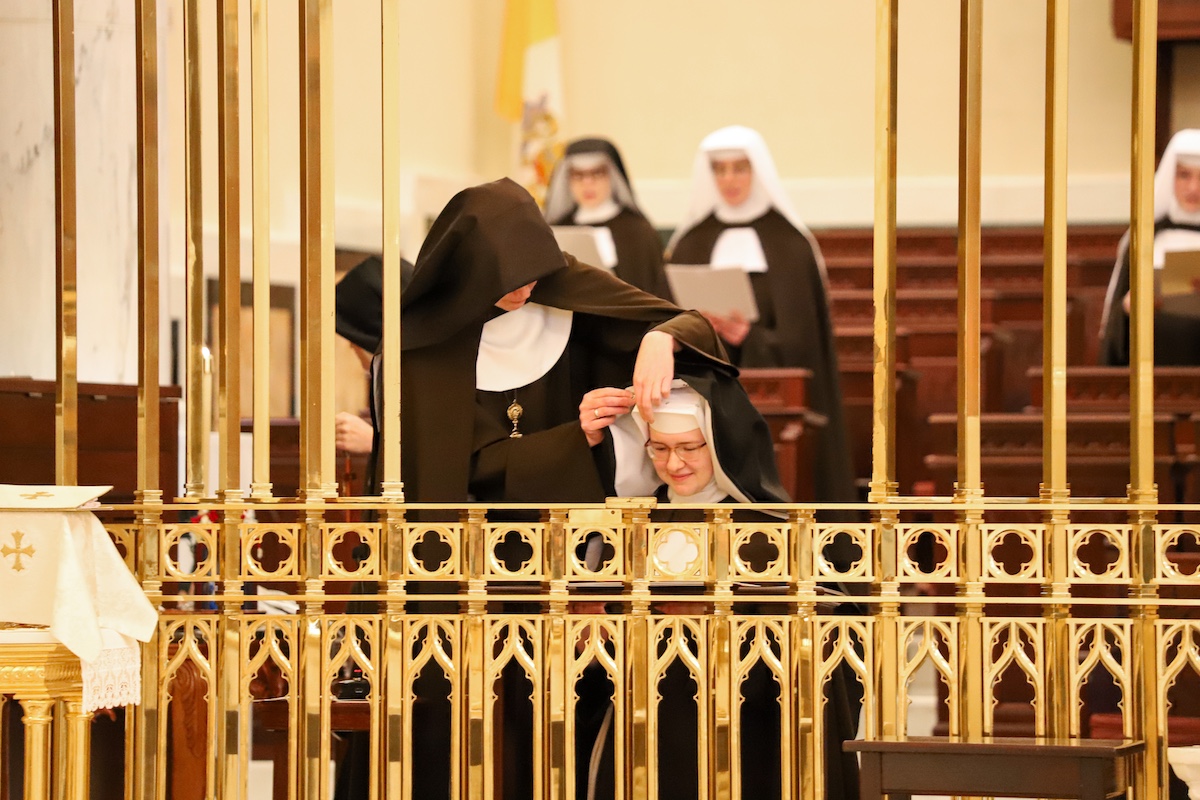
Shortly before my profession I was reminded that, as much as I am giving myself to the Lord, He is giving Himself all the more to me.
And He holds nothing back.
He “chose me for Himself.”
What more could I ask for?
I am so loved by the King of Heaven and I am delighted to be able to respond to Him through my vows.
And every day, He calls me again, to just be with Him in adoration, to sing His praises in the Divine Office, and to worship Him in the Holy Sacrifice of the Mass.
And at every moment – in the chapel, in the garden, or in the kitchen - I belong to Him.
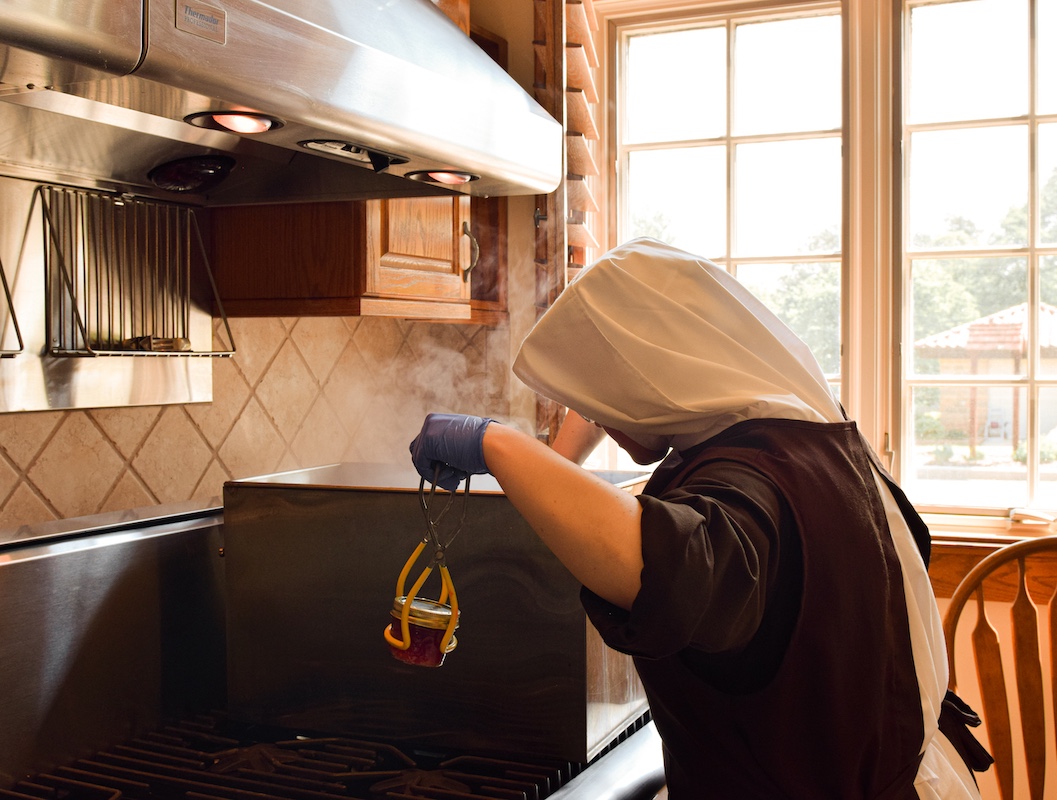
Highlights of 2025
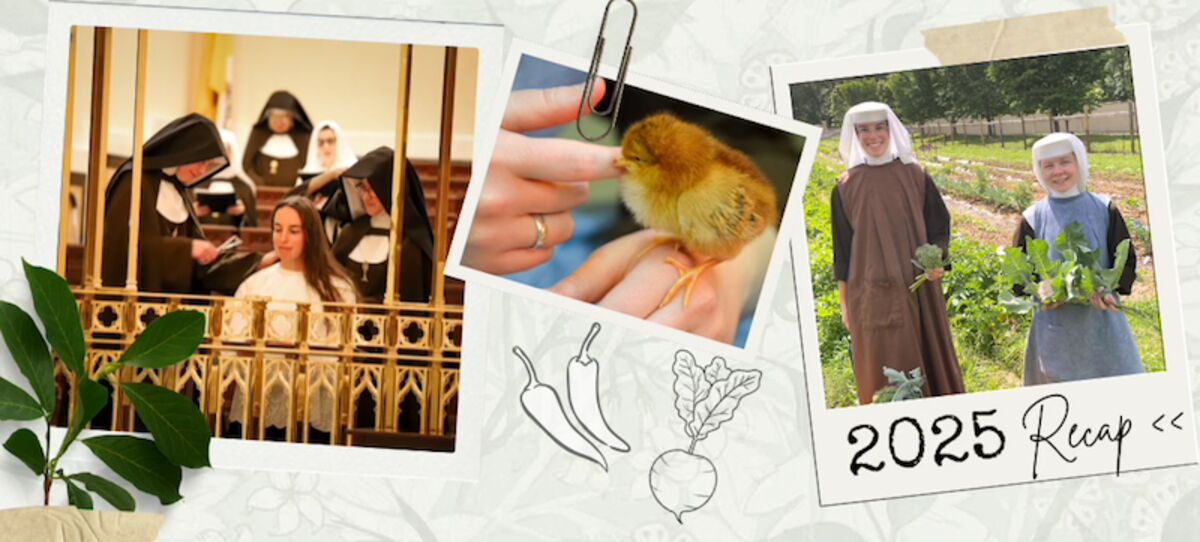
Over the past year, we were privileged to experience so many graces as a community. We would like to share a few with you, so that, like Our Lady, we can “proclaim the greatness of the Lord.”
1. January: Sr. Seraphina Marie’s Investment
Our youngest postulant was invested in the holy habit and received her new name: Sister Seraphina Marie of the Holy Face. In this dramatic step of embracing a new identity in our community, we all rejoiced for and with our sister in her determination to follow Christ’s call to her. Deo gratias!
2. April: Interregnum
Easter Monday turned out to be a somber day, both for us here at OLAM and for the entire Catholic Church: the Holy Father, Pope Francis, suddenly departed to meet the Lord. It was a new experience for some of us: Pope St. John Paul II was the last Roman Pontiff to die in office, since our beloved Benedict XVI had adopted the position of “Emeritus” well before his death. It was a strange feeling to know that there was no living pope. Of course, the Lord is always guiding His Church, but the vacancy, filled by prayers for Pope Francis’ soul, was a real and experienced one. We all eagerly looked forward to the conclave, when a new Holy Father would fill the unimaginable role of guiding the Universal Church.
3. May: Pope Leo XIV
And so, we waited. In the days leading up to the conclave, we prayer for each of the cardinals by name and savored again the universality of the Church. Names from such faraway places as India, Cote d’Ivore, and (from here, at least) Canada, as well as many others, were in our prayers as we awaited the Holy Spirit’s work to take place. The Sistine Chapel’s doors were shut, and we were granted our new Pope by the mercy of God: the first pope of American origin took the name of Leo XIV, and we rejoiced.
4. June, July, August: Life Outdoors
Summer is a busy time here at OLAM. Since our gardening has become more active, we go down to “the South Field” and do our work almost every day. One thing we’ve learned, is that, while weeding is certainly hard work, especially if the ground is dry, the challenge of “bringing in the harvest” and managing produce is definitely a real one. One plant that did very well this year was the habaneros! They outlasted and outproduced many of our other plants; as it turns out, no garden pest is not particularly interested in spicy peppers. Tomatoes made it into our homemade “Seraphic Salsa”, and cucumbers were turned into all kinds of pickles. Finally, our white radishes, planted as a kind of natural pest control, grew to completely outlandish sizes, and we turned them into lovely radish soup.
5. August/September (I don’t recall which it was): Chicks!
Our mail order chicks arrived safely at the end of summer, and instantly became a source of delight and entertainment. Warmed by a heat lamp in a crate in a back room of the monastery, they got used to “life outside the egg” in their own little feather community. My personal favorite thing about the tiny chicks was watching them go to sleep sprawled on their fluffy stomachs. One day when they had warm water, one of the yellow chicks went to sleep standing in it—we dubbed her “Bathsheba.” Once they got big enough, which happened quickly, we moved them down to the big coop where they successfully integrated with the adult flock.
____________
In conclusion, 2025 was an eventful year, to say the least! And how could we forget, too, the Jubilee Year of Hope that was so powerful for the whole Church. Some other honorable mentions of the year include the St. Clare Retreat (with Fr. Stan Fortuna), Sr. Mary Amata’s Renewal of Vows, and the death of our beloved Sr. Mary Michael. Thanks be to God for all the graces He has poured won on us and continues to pour down!
A Vocation Story
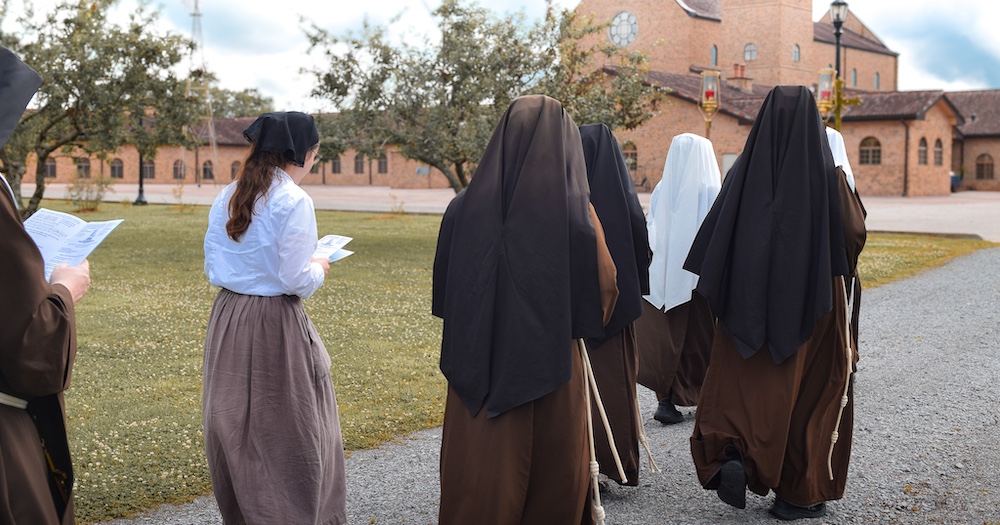
Not too long ago I was living in a busy town on the outskirts of a big bustling city.
I was keeping busy working full-time, staying active and spending quality time with family and friends.
What more could I ask for?
God was always first in my life, but what did that really mean?
I questioned,
God answered
and now I’m living in the Heart of Christ, keeping busy serving Him, living the life of a Poor Clare of Perpetual Adoration.
Having attended Catholic School from Pre-K through 12th grade, I had a decent understanding of the Catholic Faith and was familiar with Religious Sisters. My brother and I were raised in a small Catholic family of four. Our paternal grandparents were faithful and prayerful Catholics. Our grandmother frequently watched EWTN, especially Mother Angelica. This is how I knew of the “EWTN Sisters.” It was many years later that I learned they are Poor Clares of Perpetual Adoration.
In school I strived to get good grades to eventually have a good career and get married. I was involved and interested in music, sports and dance. In my sophomore year of high school I had a fun, kind-hearted theology teacher who is a Religious Sister in an active community. She said in class one day some of us may be called to Religious Life. I thought…. Hmmm, could I be one? I brushed it aside for I was attracted to and distracted by worldly delights. And off to college I went.
Sr. Mary Michael, PCPA
Sister Mary Michael of the Eucharistic Heart of Jesus, PCPA
February 25, 1931 - November 10, 2025
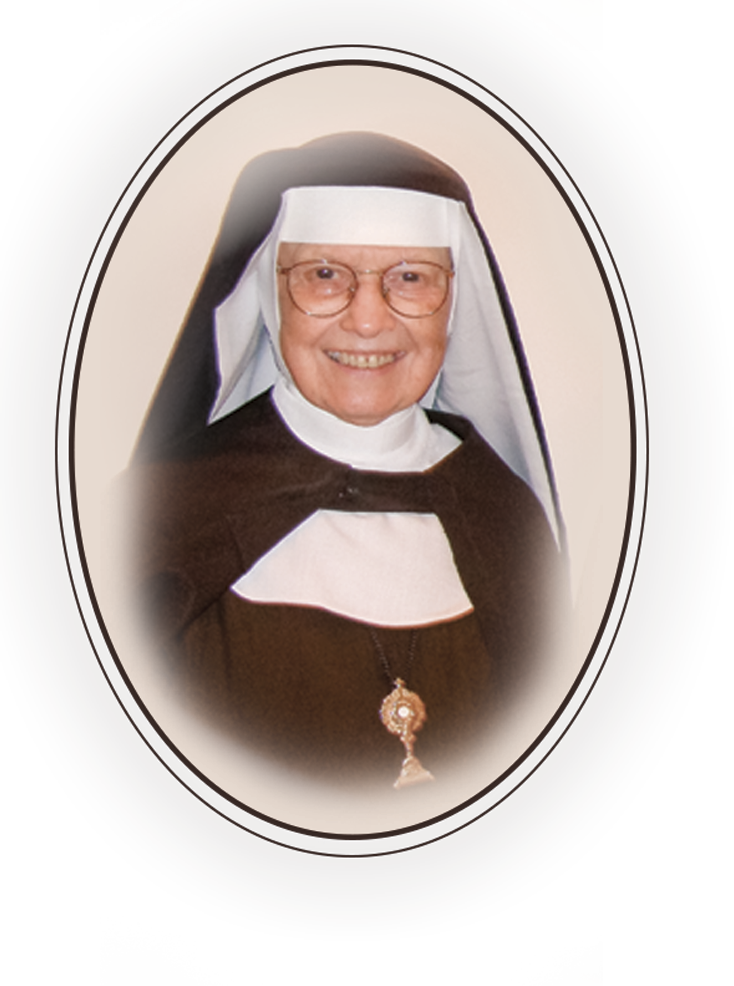
On November 10, 2025 at the age of 94, Sister Mary Michael of the Eucharistic Heart of Jesus, PCPA peacefully went home to the Lord. Fortified by the sacraments of the Church and surrounded by her community, Sr. Michael completed over 74 years of religious life at 11:37am during a brief and rare early snow shower.
Born on February 25, 1931 to Joseph and Helen Shinosky, Evelyn entered Sancta Clara Monastery in Canton, Ohio on August 15, 1951 and received the habit and her new name the following May. Sister Mary Michael made her 1st profession on May 1st, 1954.
Adventures with Mother Angelica
Not long after her solemn profession on May 1st of 1960, Sister Michael agreed to come with Mother Angelica to the new foundation in the South. Sister Michael loved her vocation from the beginning and put her whole heart into all the challenges of this new adventure.
With an unassuming nature, Sister Michael would shrug when anyone showed surprised interest over the details of this new monastic beginning. From squeezing into an overcrowded station wagon with her paper bag of ‘belongings’ for that first trip to Alabama, to each of Mother Angelica’s new inspirations to evangelize, Sister Michael showed stalwart fidelity to the Lord through thick and thin.
Sister’s Talents, Wisdom, and Devotion
Our dear Sister was renowned in the monastery for her talent in baking, cooking and sewing. Sisters frequently sought her advice when an insurmountable difficulty arose in the kitchen, or a novice was at an impasse making a new habit. When it came time for community Christmas baking, the evening was never complete until Sr. Michael arrived to sample and approve the various confections. To be told by Sister Michael that your pie had a good crust was the highest of compliments.
Known for her practical wisdom and sensible approach to challenges, in her senior years, Sister Michael was called upon to serve our community as Vicar and Councilor for several terms. She had a deep love for her Catholic Faith and was especially inspired by the Church Fathers, becoming a fervent devotee and avid reader of Saint Augustine, who in her estimation was the greatest. She held in high esteem the priesthood and missionaries who make tremendous sacrifices for the faith she loves so much. Sr. Michael greatly treasured her relationships with family and friends who each held an important place in her heart. It was beautiful to witness her sense of gratitude for all who showed her kindness.
Her Deepening Spiritual Life and Legacy
Our eldest Sister’s love for our young vocations and new members took on a new spark as she drew closer to eternity. Her love of the PCPA life and fidelity to prayer continued to grow throughout her last days on earth. She persevered in attending Mass until she no longer had the strength to sit in her usual place. Once she had moved into the Infirmary, Sisters would often find her having fallen asleep with her hands folded in prayer, or silently praying, oblivious to her visitors.
Sister Michael would often say in her last days “I am so grateful for all the prayers for me.” No doubt she would want all to experience as she did the truth of these words of her beloved St. Augustine: “To fall in love with God is the greatest romance: to seek Him the greatest adventure: to find Him, the greatest human achievement.”
A Novice’s Musings on the Canonical Year
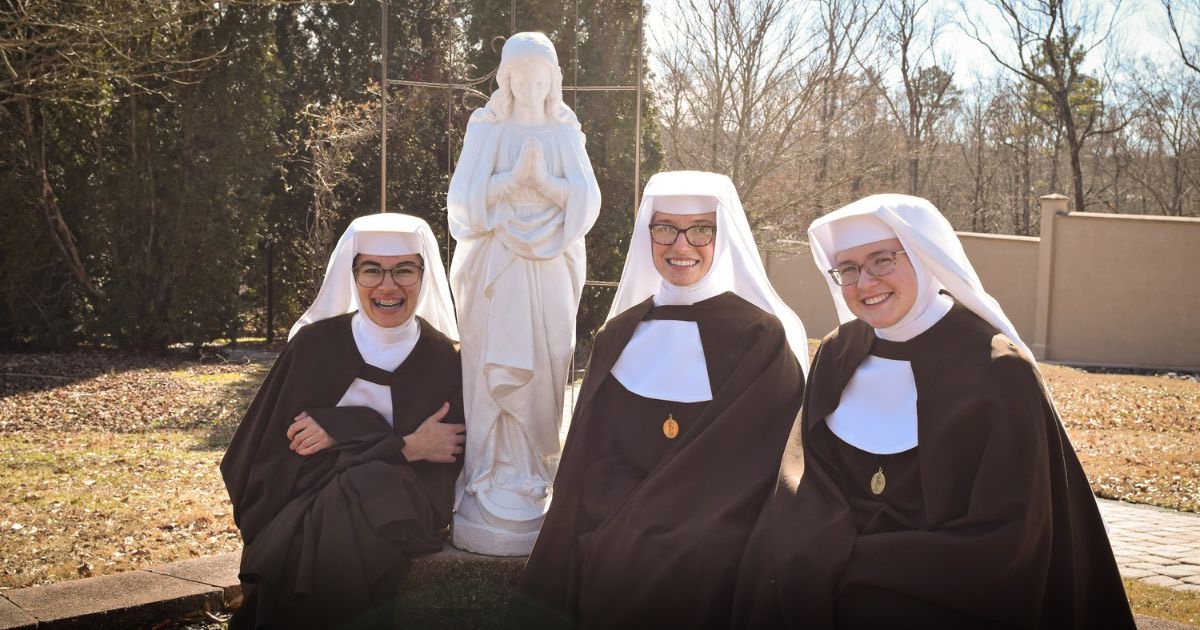
It is a great gift and joy to be in the monastery and these years of formation are extra special.
Part of the process of becoming a full-fledged PCPA nun is the canonical year.
This second year of the novitiate is also the final year of preparation for first profession. And while it could be described in terms of sacrifice (giving up communication with family and friends), it is also a year of profound growth in love – both giving and receiving.
The experience of greater enclosure is giving me the opportunity to lean more and more on the Beloved.
In my attempts to focus on the “one thing necessary,” I am learning how to keep my “eyes fixed on the Lord our God until He show us His mercy” (Ps 123) as we pray each day in the Divine Office.
And by remaining attentive to Him, imitating our Lady, the handmaid of the Lord,
I have found myself growing in peace, joy, and freedom of heart
so that (please God!) at the end of this year I may give myself entirely to Him.
Lightning Contemplation
Stained glass windows don’t make much sense in the dark.
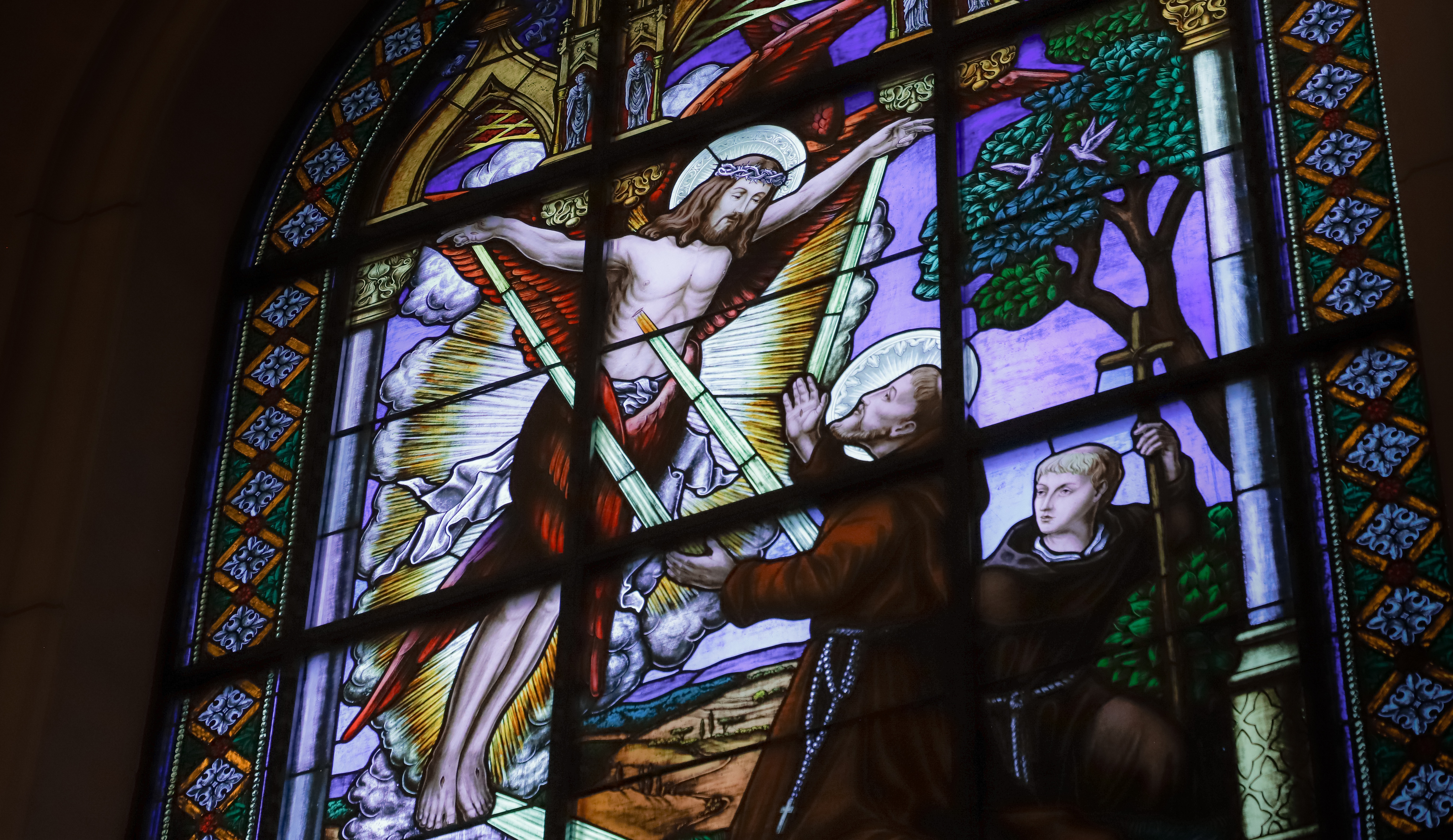
In our chapel, we have a beautiful window which pictures our Holy Father St. Francis receiving the stigmata from the crucified seraph—(why Our Lord appeared in this way, crucified, but with the six wings of a Seraphim Angel is a mystery for pondering).
I often glance at it during the day.
One night during a storm, I looked over at it.
Divine Remedy
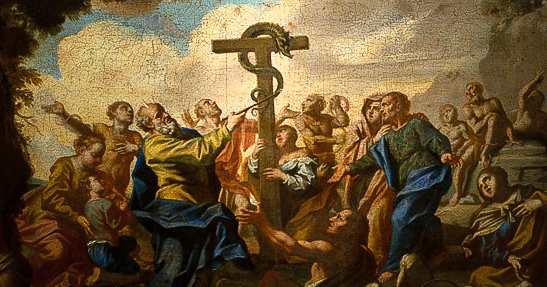
The biblical account of the saraph serpents in Numbers 21:4-9 has always unsettled me.
Sure, the people were complaining about Divinely-provided manna from heaven, but did such a complaint and insult really merit the deadly bite of a serpent?
Why would God let these terrible serpents bite His people, and why is the remedy for such a sting to look at bronze serpent hung on a pole?
It seems cruel to be told to look at an image of the thing that could potentially have killed you as the remedy to save you. . . . except that God is not cruel:
He is a tender Father, and a master poet.
From Adam and Eve, to the destruction of the temple and Babylonian captivity, God’s people have always been complainers, covenant-commandment-breakers, and wanderers in the desert.
Yet God does not give up on us.
Angelus Domini nuntiavit Mariae...
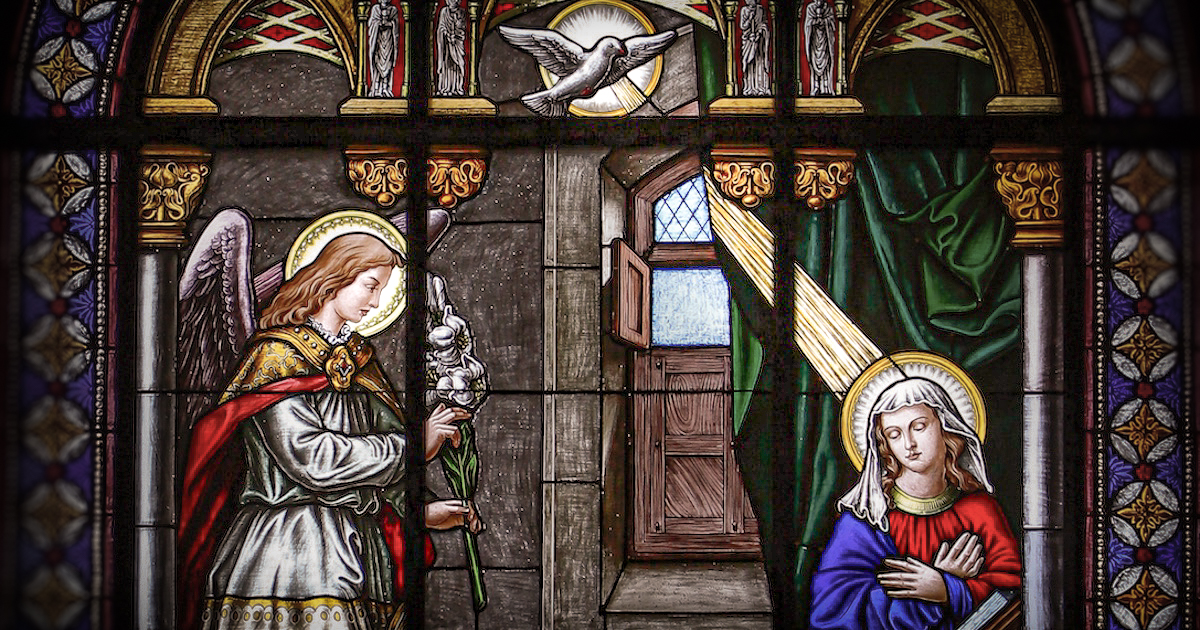
The Incarnation is one of the central mysteries in our Faith. With the Incarnation, "the Word became flesh and dwelt among us, full of grace and truth; we have beheld his glory, glory as of the only Son from the Father" (John 1:14). And yet that moment occurred in complete obscurity. During the most important conversation in all history, no one apart from Mary had any idea! Not even St. Joseph was aware of what was taking place in the body and soul of Our Lady at the time of the Annunciation. It is an intimate moment, a personal encounter with the Living God.
The Angelus is a prayer that draws us into the moment when the Angel Gabriel announced to the Virgin Mary that she would conceive and become the mother of Jesus, the Son of God. This prayer is traditionally recited three times daily: at dawn, noon, and dusk.
In St. Bernard of Clairvaux's famous homily on the Annunciation, he addresses Our Lady and reminds her that the whole world awaits her reply: “Tearful Adam with his sorrowing family begs this of you, O loving Virgin, in their exile from Paradise. Abraham begs it, David begs it. All the other holy patriarchs, your ancestors, ask it of you, as they dwell in the country of the shadow of death. This is what the whole earth waits for, prostrate at your feet.”
As we pray the Angelus we can relive and enter into that incredible conversation. We repeat and ponder Mary’s reply to the Angel. We are invited to fix our gaze on what it is the Lord is asking of us daily, and strive to imitate Our Blessed Mother’s response to His invitation. She is the perfect example of saying yes to God’s will in our lives.
Our Lady’s great faith and openness to the Holy Spirit brought Heaven to earth! By welcoming the Word into her heart, Mary became the bearer of Life for the entire world.
Similar to the bells that are rung during the Holy Sacrifice of the Mass, the ringing of the Angelus bells calls to attention the importance and the sacredness of the Annunciation and of the Incarnation. When we hear those bells ring out, we can exult in the tremendous gift of the Incarnation, and give thanks to the Lord that Mary said, “Fiat mihi secundum verbum tuum!”
The Real Presence of Jesus in the Eucharist, like the Incarnation, is a profound and mysterious truth of faith. In a very literal way, the Incarnation is prolonged by the Eucharist. In the Eucharist this same Christ gives himself to each one who receives the Eucharist as nourishment so that we are nourished by His Body, Blood, Soul and Divinity. Learning from Our Blessed Mother to nurture the Word in faith, prayer and trust, we too can become bearers of grace, sharing in her openness and surrender to the Lord’s Will.
Lent and the Great Exchange
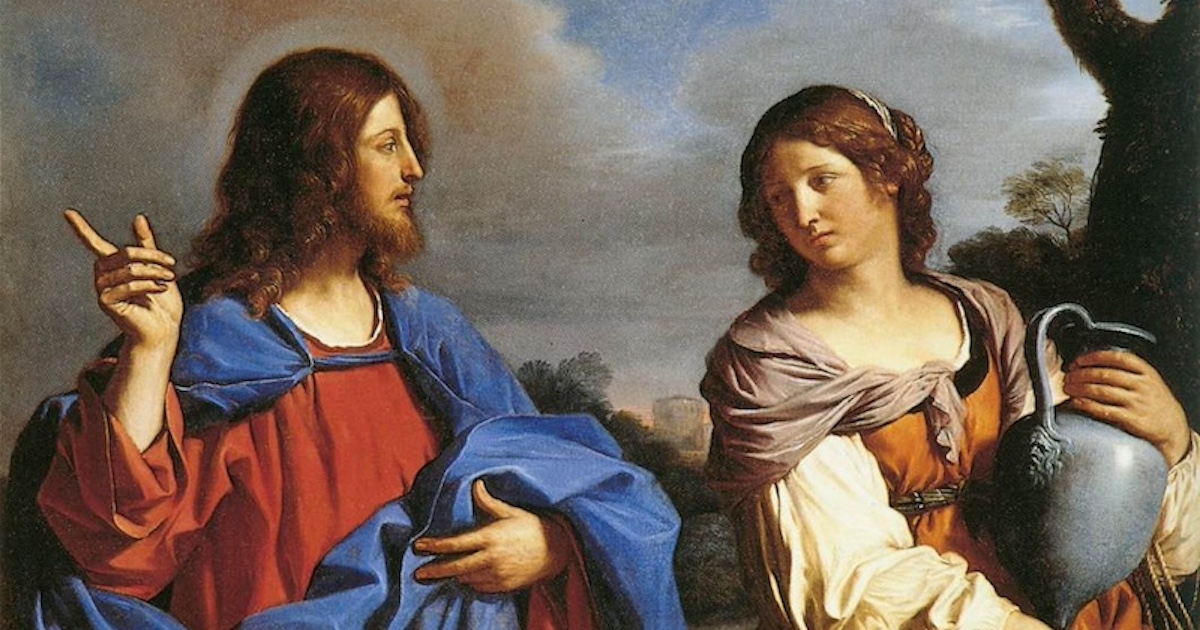
A Scripture passage that we often hear during Lent is from John 4. “If you knew the gift of God, and who it is that is saying to you, ‘Give me a drink,’ you would have asked him, and he would have given you living water.” In this ever astonishing line, one aspect that stands out is the ‘exchange’ the Lord offers for the asking: real, created water for real eternal water, grace.
As we know, there are so many exchanges that run through Salvation History; this strong theme is recounted repeatedly in the Office. Some of the most memorable ones from Lent “Thus they exchanged their glory / For the image of an ox that eats grass.” “They exchanged the truth about God for a lie, and worshiped and served created things rather than the Creator” (Rom 1:26). There is also the exchange offered to the Lord by Satan in the desert, where we see Jesus turn these degrading compromises into victory over all that ensnares us in our pursuit of Him. At the climax of the whole Liturgical Year we enter into the ultimate exchange: the Lord’s own gift of Himself in the Holy Eucharist, and the Triduum where we relive the Father’s greatest exchange that we hear proclaimed in the Exultet: “to ransom a slave you gave away your Son.”
Honoring Saint Joseph
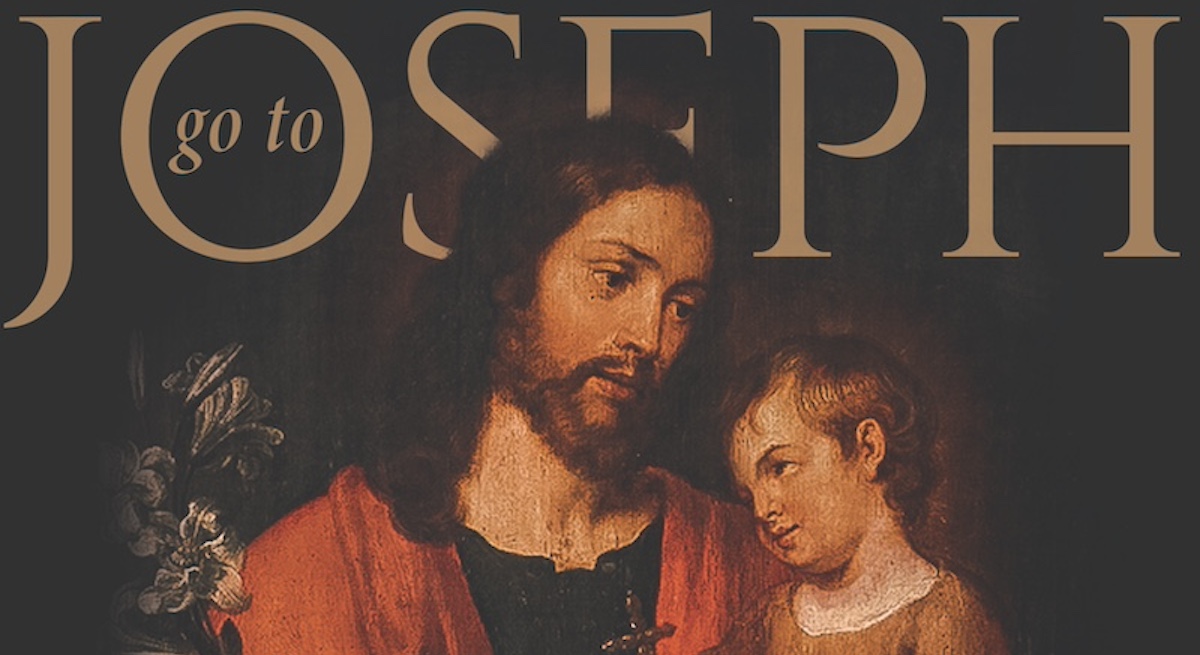
"Joseph was probably a young man, strong, virile, athletic, handsome, chaste, and disciplined... Instead of being a man incapable of love, he must have been on fire with love… Instead, then, of being dried fruit to be served on the table of the king, he was rather a blossom filled with promise and power. He was not in the evening of life, but in its morning, bubbling over with energy, strength, and controlled passion."
These words of Venerable Fulton Sheen capture the essence of the beauty of St. Joseph's chaste and priestly heart.
Perhaps that sounds strange. St. Joseph was not a priest, was he? He was the husband of Mary, a simple carpenter. And, yet, St. Joseph was so much more than a convenient cover for the mystery of the Incarnation and Virgin Birth. He was not an extra character who had to be worked into the plot of God's plan for practical reasons.
Joseph was a young man on fire with love for God who was chosen, no less than His betrothed bride, to be consecrated: totally set apart by God for a unique and sacred mission. The gift of Joseph's life and chastity was precious to God, a Fiat that He desired to be united with the Fiat of our Blessed Mother.
Through St. Joseph's yes flowed a powerful fruitfulness. He was wedded to Mary, the Virgin made Church, as our Holy Father Francis loved to call her. He was chosen to be the Virgin Father of the Son of God.
The Reflections of a PCPA Novice
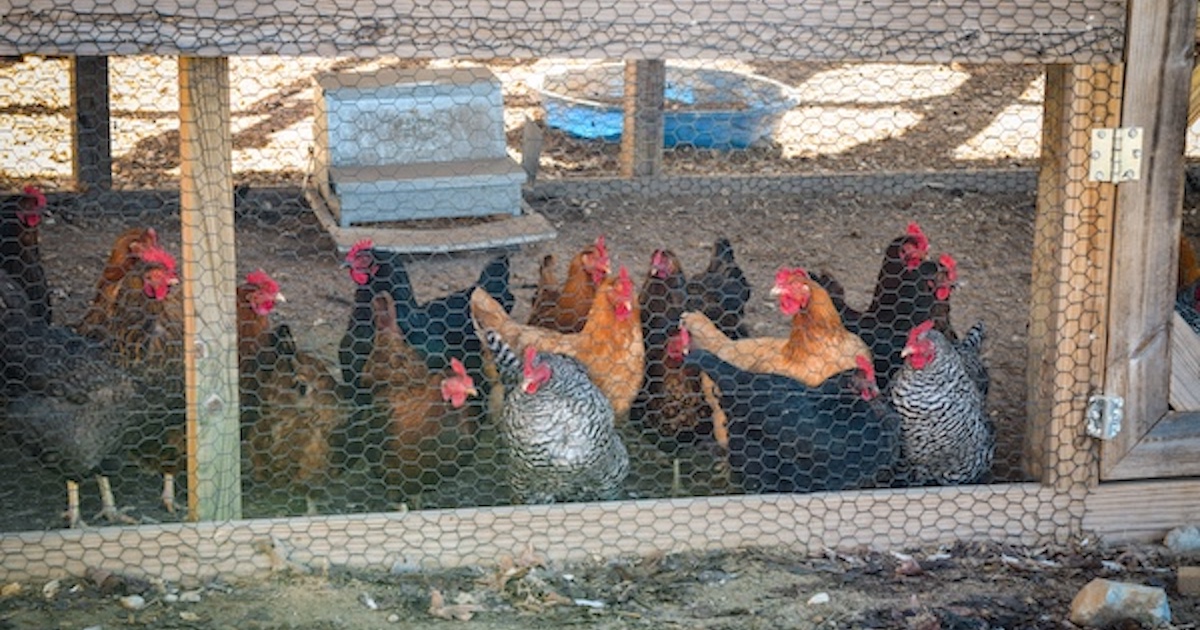
This year in the Monastery I was assigned three charges (jobs):
chicken keeper,
sewing assistant
and sous-chef (aka assistant cook).
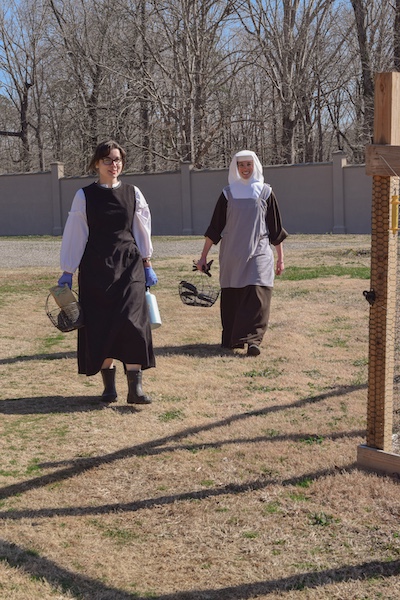
After spending some time with each of these tasks, I’ve come to discover a few hidden treasures that I’d like to share.
News!
January 2025
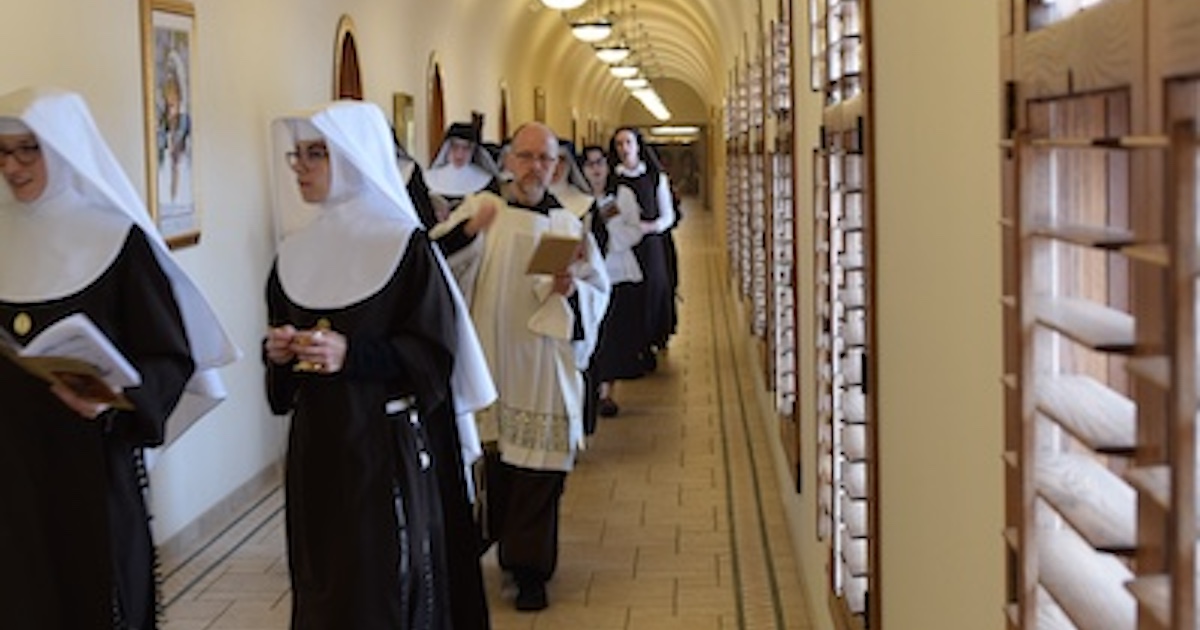
It was cleaning, cleaning and more cleaning getting ready for our house blessing on the Feast of the Epiphany! Anything that stood still for longer than a few seconds got either polished, dusted or scoured. Because of the Three Kings coming to Our Newborn King, the feast of the Epiphany holds a special place in the hearts of the PCPA’s because of our dedication of adoring this same King in the Most Blessed Sacrament.
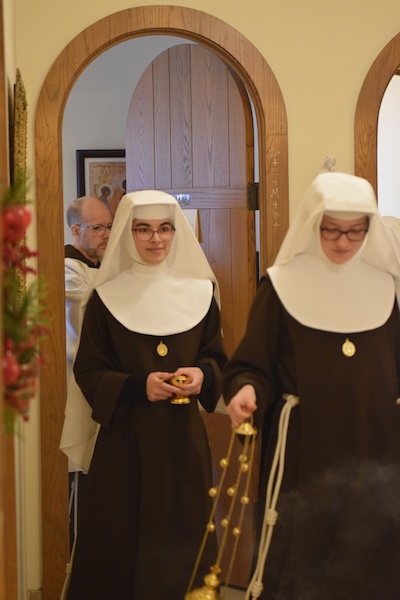
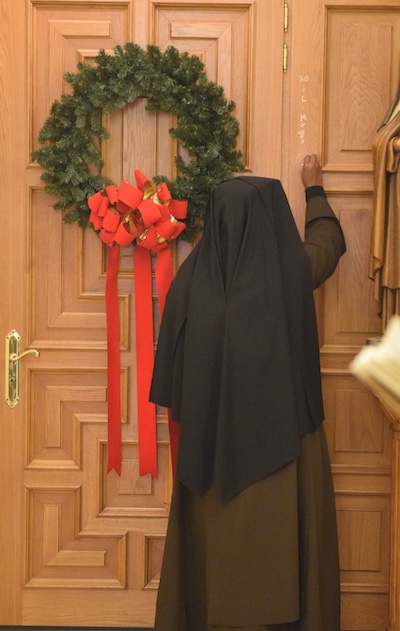
We were then blessed to go right into our canonical retreat with our retreat master, Fr. Ignatius John Sweitzer, OP, which was teeming with graces. Father has a great love of the contemplative life and shared with us many of his own thoughts and reflections from his time in prayer, as well as drawing from the great masters, Ss. Teresa of Avila, John of the Cross & others. It was a graced filled week indeed!
Reflection of a PCPA Novice: Investment
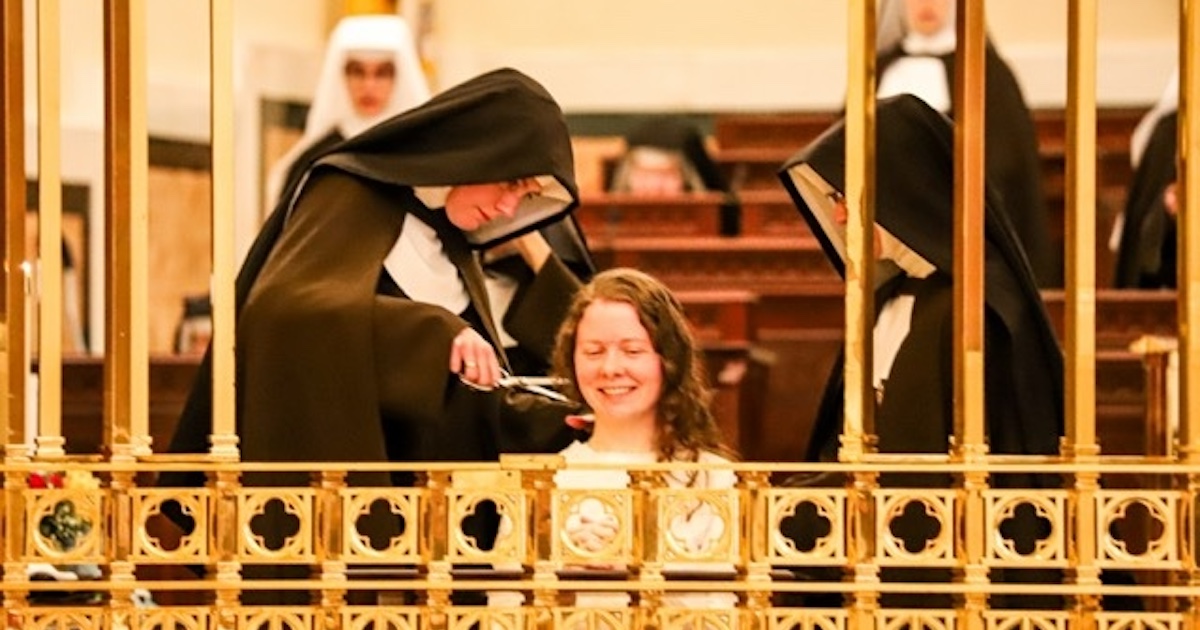
The morning of my Investment, I was a disaster.
I had slept very poorly, anticipating what was to come. Knowing that a good night’s sleep would be crucial, of course I was more awake than ever – like a kid at Christmas!
When the bell to wake up rang, I got up to wash my face and saw big bags under my eyes and a frizzy mass of hair.
I got dressed and went to the Chapel for Divine Office, and every Sister I locked eyes with beamed at me. I couldn’t help it; I began to glow!
At Mass I had intense butterflies. Not the cute, fluttering kind, these were waging a full-scale war. When I received Our Lord in Holy Communion I began to calm down. He gave Himself to me; this was my chance to finally begin returning the favor.